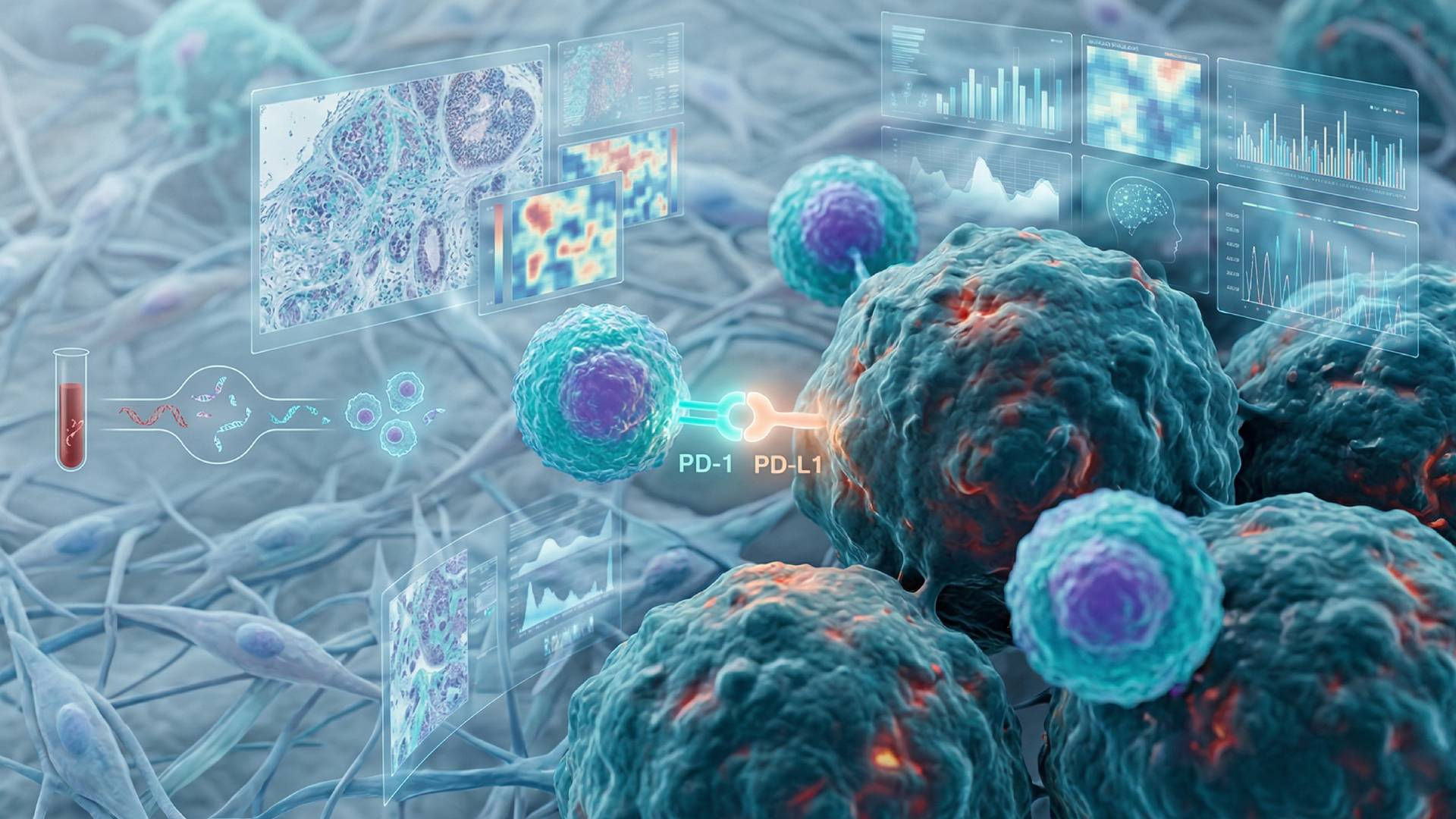
Understanding PD-L1 as a Predictive Biomarker: Clinical Insights for Precision Oncology

Understanding PD-L1 as a Predictive Biomarker: Clinical Insights for Precision Oncology

PD-L1 expression has become a cornerstone in cancer immunotherapy decision-making. You rely on PD-L1 testing to predict which of your patients might benefit from immune checkpoint inhibitors. However, the biomarker’s clinical application involves complexities that require careful interpretation.

Key Takeaways

  • PD-L1 testing guides immunotherapy decisions but shows variable predictive accuracy across cancer types and assays
  • Five FDA-approved IHC assays measure PD-L1 differently, creating interpretation challenges at low-to-moderate expression levels
  • Combining PD-L1 with TILs, TMB, or liquid biopsy markers improves patient selection beyond single-biomarker approaches
  • Exosomal PD-L1 and AI-driven standardization address temporal heterogeneity and assay variability limitations

What is PD-L1 and Why Does It Matter in Your Practice?

PD-L1 (Programmed Death-Ligand 1) is a protein expressed on tumor cells and immune cells. When PD-L1 binds to PD-1 receptors on T cells, it suppresses immune responses. Cancer cells exploit this pathway to evade immune surveillance.

Tumors upregulate PD-L1 to inhibit T-cell activity. Checkpoint inhibitors block this interaction, allowing the immune system to recognize and attack cancer cells. PD-L1 expression levels help you predict treatment response in your patients.

Understanding PD-L1 as a Predictive Biomarker: Clinical Insights for Precision Oncology

Higher PD-L1 expression often correlates with better outcomes from anti-PD-1/PD-L1 therapies. However, the correlation varies across cancer types. Not all patients with high PD-L1 respond, and some with low or negative PD-L1 still benefit.

How Does PD-L1 Testing Work in Clinical Settings?

Immunohistochemistry (IHC) remains the standard method for PD-L1 assessment. Pathologists analyze tumor biopsy samples using FDA-approved assays: 22C3, 28-8, SP142, SP263, and 73-10.

Each assay measures PD-L1 expression differently. Tumor Proportion Score (TPS) quantifies expression on tumor cells, while Combined Positive Score (CPS) includes both tumor and immune cells.

Common thresholds include 1%, 5%, and 50% positivity. A 50% cutoff typically indicates strong candidacy for monotherapy, while lower cutoffs may guide combination therapy decisions.

Head and neck cancers also require testing in many treatment algorithms. The specific assay you use depends on the planned therapeutic agent. Different drugs have companion diagnostics validated with specific assays.

At the recent ImmunoMark Summit in London, experts presented AI-driven approaches to PD-L1 standardization. These innovations aim to reduce interpretation variability across laboratories.

Does PD-L1 Expression Reliably Predict Patient Outcomes?

PD-L1 biomarker clinical validation has progressed through numerous trials. Over 80% of FDA approvals for checkpoint inhibitors involve PD-L1 as a correlate. Positive PD-L1 status predicts higher response rates in many cancers.

Studies show improved progression-free survival when PD-L1 expression is elevated. Overall survival benefits emerge in PD-L1-positive populations. Neoadjuvant settings demonstrate major pathological responses correlating with expression levels.

Combining PD-L1 with tumor-infiltrating lymphocytes (TILs) enhances prediction. The checkpoint inhibitor response biomarker performs better when contextualized with immune infiltration. TIL-rich, PD-L1-positive tumors show the strongest responses.

NCCN guidelines recommend PD-L1 testing to guide your therapy selection. Testing helps you identify patients likely to benefit from monotherapy versus combination approaches. Clinical decision-making balances efficacy predictions with safety considerations.

Higher PD-L1 may correlate with increased risk of severe adverse events. You must weigh response likelihood against toxicity potential. The biomarker informs but does not dictate your treatment decisions.

John Smeraglia from AstraZeneca delivered a keynote at ImmunoMark Summit London 2026 on biomarker strategy as a clinical decision-making tool. His presentation highlighted how integrating multiple biomarkers improves patient selection.

What Limitations Should Clinicians Recognize When Using PD-L1?

Understanding where PD-L1 testing falls short helps you make better-informed decisions. Several technical and biological factors can affect your interpretation of results.

  1. Assay variability creates interpretative challenges

Different assays produce discrepant results, particularly at low-to-moderate expression levels. Comparing results across platforms proves difficult without harmonization studies.

  1. Spatial and temporal heterogeneity limits biopsy accuracy

Single biopsies capture only one tumor region. PD-L1 expression varies across different metastatic sites and changes over time during treatment.

  1. Dynamic expression changes reduce predictive value

Treatment induces dynamic changes in PD-L1 expression. Your post-therapy biopsies may show different patterns than baseline samples captured weeks or months earlier.

  1. PD-L1-negative tumors can still respond

Non-inflamed tumor microenvironments without TILs challenge our reliance on PD-L1 alone. The biomarker misses responders in immunologically cold tumors.

  1. Primary resistance occurs despite high expression

Some of your patients with high PD-L1 experience primary resistance. Mechanisms beyond PD-1/PD-L1 drive immune evasion in these cases.

Tumor mutational burden (TMB), microsatellite instability, and other factors influence outcomes. A comprehensive panel discussion at the London 2026 edition of ImmunoMark Summit explored these resistance mechanisms. Experts from J&J and Roche shared insights on overcoming predictive limitations.

What Emerging Approaches Can Improve Predictions?

Exosomal PD-L1 offers a non-invasive alternative to tissue biopsy. Blood-based testing measures PD-L1 on extracellular vesicles. Liquid biopsies provide systemic tumor immune status information.

Exosomal PD-L1 shows promise for real-time monitoring of your patients. Serial measurements track treatment response dynamics. Accessibility surpasses tissue IHC, particularly for metastatic or hard-to-biopsy lesions.

Combined biomarker panels enhance your predictive accuracy. PD-L1 plus TMB identifies additional responders. Multi-omics approaches integrate genomic, transcriptomic, and proteomic data.

Circulating tumor cells (CTCs) add another dimension to our understanding. Digital pathology workflows improve reproducibility and standardization. Artificial intelligence models analyze complex biomarker patterns.

Sessions on extracellular vesicle profiling at ImmunoMark Summit demonstrated how liquid biopsy technologies complement traditional tissue testing. These approaches address temporal heterogeneity challenges.

Composite scores combining PD-L1 and TILs perform better than either alone. Integrated immune profiling captures microenvironment complexity. Multiplex immunofluorescence reveals spatial relationships between biomarkers.

How Are Regulatory and Commercial Landscapes Evolving?

Companion diagnostics require rigorous validation before approval. Regulatory bodies demand evidence of analytical and clinical validity. Multi-center studies establish performance characteristics across diverse populations.

Commercialization involves collaboration between diagnostic and pharmaceutical companies. Agilent recently received approvals for PD-L1 testing in ovarian cancer. Roche, Dako, and Ventana provide widely used platforms.

Laboratory implementation requires quality assurance programs in your institution. Proficiency testing ensures consistent interpretation. You and your pathology colleagues need training on scoring criteria specific to each assay.

Reimbursement policies influence testing adoption in your healthcare system. Insurance coverage varies by indication and region. Value-based care models emphasize biomarker-guided treatment selection.

Where Is Research Headed in PD-L1 Biomarker Development?

Ongoing research explores toxicity prediction using PD-L1 status. Understanding adverse event correlations improves your risk-benefit discussions with patients. Neoadjuvant trials investigate PD-L1 as a response predictor before surgery.

Novel immune checkpoint targets beyond PD-1/PD-L1 are emerging. LAG-3, TIM-3, and TIGIT represent next-generation targets. Combination strategies require new predictive biomarkers for your clinical toolkit.

Resistance mechanisms drive biomarker discovery efforts. Tumor microenvironment modulation affects PD-L1 expression. Metabolic influences on immune checkpoint pathways warrant investigation.

Epithelial-mesenchymal transition interacts with PD-L1 biology. Cancer cell intrinsic processes influence immunotherapy response. Comprehensive profiling moves beyond single biomarkers.

You can also join collaborative research initiatives that advance biomarker science. Multi-institutional studies generate the robust validation data that regulatory bodies require. Partnerships between academia and industry move discoveries from bench to bedside.

The Next-Gen Immuno-Oncology stream at ImmunoMark Summit London 2026 featured presentations on CAR-T multi-antigen targeting and ML-driven multispecific antibody engineering. These sessions explored how emerging therapies will require novel biomarker strategies. Get a quick overview of the summit in this short video.

Stay Current in This Rapidly Evolving Field With The ImmunoMark Summit

Scientific conferences let you exchange knowledge directly with peers working on similar challenges. Immuno-oncology biomarker events showcase data from recent trials and real-world studies. You can access specific implementation strategies used in other clinics and labs.

The ImmunoMark Summit 2026 UK Edition brought together 400+ senior professionals, with 50 expert speakers, in March 2026 at the DoubleTree by Hilton, Tower of London. Decision-makers from pharma, biotech, and academia attended two parallel streams over two days.

Understanding PD-L1 as a Predictive Biomarker: Clinical Insights for Precision Oncology

Caption: Attendees at the Immunomark 2026 edition

The Biomarkers & Companion Diagnostics stream covered home-sampling biomarkers and AI-driven PD-L1 standardization. Louis Boon from JJP Biologics keynoted on next-generation IO approaches. Half the attendees held senior leadership positions.

Yariv Hefez from Merck moderated a panel on biomarkers as market-makers in oncology. Panelists from J&J and Roche participated in the discussion. Post-event surveys showed nine out of ten attendees said they would recommend the summit to colleagues.

You can request the full event report by sharing your email ID below.

Understanding PD-L1 as a Predictive Biomarker: Clinical Insights for Precision Oncology

Get the post-show report here.

View highlights from ImmunoMark Summit London 2026 to see what innovations were discussed. The image gallery and post-show report showcase sessions on AI spatial profiling and molecular mimicry for cancer vaccine design.

We’re coming up with another edition in 2027. Register for ImmunoMark Summit Boston 2027 to connect with scientists and clinicians developing companion diagnostics. The upcoming edition runs dedicated tracks on companion diagnostics and next-gen IO biomarkers.

#ImmunoOncology
#Biomarkers
#CancerResearch
#ClinicalTrials
#IOConferences
Share this article:

Boston Biotech & Life Sciences Events 2026: Complete Guide

Boston Biotech & Life Sciences Events 2026: Your Complete Guide

Boston has long been one of the world’s most important addresses for biotechnology and life sciences. If you work in pharma, biotech, clinical research, or drug development, chances are your calendar already has a few Boston dates circled this year. And for good reason.

2026 is shaping up to be a packed year for the community. There are more than a dozen notable gatherings spanning immunology, biomanufacturing, early-stage investing, AI in drug discovery, and regulatory science. Whether you are looking to network with investors, stay current on immuno-oncology science, or explore biologics manufacturing at scale, there is a Boston event designed for exactly that.

This guide pulls together the key Boston biotech and life sciences events for 2026 so you can plan, prioritize well, and get the most out of each one.

Key takeaways

  • Boston’s 2026 life sciences calendar spans spring and fall, with events covering immunology research, biomanufacturing, early-stage investing, AI in discovery, and cross-functional leadership.
  • No single event serves every professional. Matching each event to your specific role, modality focus, and career goals is the most useful filter when deciding where to invest your time.
  • The ImmunoMark Summit is worth attention for IO and biomarker professionals, offering a two-track format that goes deep on companion diagnostics, liquid biopsy, and precision oncology strategy.
  • Preparation shapes the return on investment. The value you take home from any pharma networking event in Boston depends largely on the work you do before you walk in the door.

Disclosure: ImmunoMark Summit is featured in this guide as a highlighted event. We have included it based on its relevance to life science professionals working in immuno-oncology and biomarker science.

The leading 2026 life sciences events at a glance (and how we chose them)

Before we get into the details of each event, here is a quick overview of what is coming up this year. Use this as your planning reference.

EventDatesLocationFormatBest For
ImmunoMark Summit 2026

(Featured)
March 5-6London, UKIn-personIO and biomarker scientists, companion diagnostics professionals
MassBio State of Possible ConferenceMarch 26Boston, MAIn-personIndustry-wide leadership, policy, networking
MassBio Legal Affairs Premier ConferenceApril 8Boston, MARoundtableLegal and compliance professionals
IMMUNOLOGY2026 (AAI Annual Meeting)April 15-19Boston, MAIn-personImmunology researchers, translational scientists
Oligonucleotides & Peptides Xchange BostonApril 30Boston, MAInvitation-onlyOligo and peptide therapeutics scientists
AI in Drug Discovery Xchange BostonMay 6Boston, MAIn-personAI-focused discovery teams
Fierce Biotech WeekMay 12-14Boston, MAIn-personR&D, BD&L, senior leadership
Bio-IT World Conference & ExpoMay 19-21Boston, MAHybridData science, precision medicine, tech
RESI BostonSeptember 22-23 (+virtual)Boston, MAHybridEarly-stage companies, investors
Biotech Week Boston + BioProcess InternationalSeptember 22-25Boston, MAIn-personBiomanufacturing, biologics, CDMOs

How we compiled this list

We evaluated life sciences events for 2026 based on a consistent set of criteria. An event was included if it met most of the following:

  • Confirmed 2026 dates and venue at the time of publication
  • Relevant audience including pharma, biotech, clinical research, or adjacent fields
  • Substantive programming such as scientific sessions, workshops, partnering meetings, or credible keynote speakers
  • Established track record or clear institutional backing

We did not rank events against one another. Each serves a different function and a different audience. The goal is to help you identify which ones align with your work and goals for the year.

Events were sourced from MassBio, Informa Connect, Life Science Nation, the American Association of Immunologists, hubXchange, Convolign Business Consulting, and published conference listings on BioSpace and BioPharma Dive.

Why Boston Remains the Center of the Life Sciences Calendar

Boston is not just a convenient venue. It is home to a dense cluster of research hospitals, academic institutions, biotech startups, and global pharma headquarters. The Seaport and Kendall Square districts have become two of the most active life sciences corridors in the world.

Events held here benefit from that proximity. Speakers are often local, collaborations form naturally, and access to the broader ecosystem makes even hallway conversations productive. That said, the sheer volume of events in 2026 means you will need to be intentional about which ones to prioritize. The following breakdown covers each event with enough detail to help you decide.

The Boston biotech events in detail

1. ImmunoMark Summit 2026 (Featured)

March 5-6, 2026 | London, UK

For professionals working at the intersection of immuno-oncology and biomarker science, this is the event to know about. Curated by Convolign Business Consulting, the ImmunoMark Summit brings together researchers, clinicians, pharma and diagnostics professionals, and regulatory experts focused on the next generation of IO biomarkers and companion diagnostics.

The summit runs two dedicated parallel tracks: Next-Gen Immuno-Oncology and Biomarker & Companion Diagnostics. You can follow one track throughout or move between them based on your priorities for the two days.

Sessions cover liquid biopsy technologies, multiplex immunoassay platforms, companion diagnostic development strategies, translational research, and evolving regulatory frameworks. The format includes expert panel discussions, real-world case studies, and structured one-to-one networking.

Best for: Researchers, scientists, and clinical and regulatory professionals working on biomarker-driven cancer treatment, companion diagnostics, and precision oncology.

Visit the ImmunoMark Summit event page to learn more and register

2. MassBio State of Possible Conference

March 26, 2026 | Omni Boston Hotel at the Seaport

This is the flagship annual event for Massachusetts life sciences, and it tends to set the tone for the industry year. Hosted by the Massachusetts Biotechnology Council, the conference brings together executives, scientists, policymakers, and patient advocates for a full day of programming. The 2026 theme, “Behind the Breakthrough,” focuses on the people and purpose driving innovation, not just the science itself.

Confirmed speakers include Noubar Afeyan of Flagship Pioneering, Christopher Viehbacher of Biogen, and Massachusetts Governor Maura Healey. Several biotech CEOs from companies including Q32 Bio, City Therapeutics, and QurAlis are also featured. The day closes with a networking reception.

Best for: Anyone working in or adjacent to Massachusetts life sciences who wants a pulse on the broader industry and policy landscape.

3. MassBio Legal Affairs Premier Conference

April 8, 2026 | MassBioHub, Boston

A roundtable-style gathering specifically for senior legal professionals at life sciences member companies. Topics center on regulatory challenges, emerging opportunities in biopharma law, and shared practice questions across the legal community.

Best for: In-house legal, compliance, and regulatory affairs professionals at biopharma companies.

4. IMMUNOLOGY2026 — American Association of Immunologists Annual Meeting

April 15-19, 2026 | Boston, MA

This is the 109th annual meeting of the American Association of Immunologists, and one of the most scientifically rigorous conferences on the calendar. The agenda runs deep on immunology research, from leukocyte homing to tissue immunity. The President’s Symposium features speakers from Harvard Medical School and the University of Calgary, among others.

Best for: Immunology researchers, translational scientists, and drug developers working on immune-mediated pathways.

5. Oligonucleotides & Peptides Xchange Boston

April 30, 2026 | Boston, MA

A focused, invitation-level forum for senior scientists and executives working on oligonucleotide and peptide therapeutics. The format is designed for active collaboration through roundtables, expert talks, one-to-one meetings, and poster sessions. Registration is complimentary for qualified delegates.

Best for: Scientists and executives with pipelines in RNA, antisense, or peptide modalities.

6. AI in Drug Discovery Xchange Boston

May 6, 2026 | Boston, MA

Artificial intelligence is reshaping drug development, and this one-day event focuses on what that looks like in practice. Sessions cover target identification, lead generation and optimization, drug response prediction, and data quality challenges. The format leans toward roundtables and peer discussion rather than lecture-style keynotes.

Best for: Discovery scientists and R&D leaders actively integrating AI and machine learning into their workflows.

7. Fierce Biotech Week

May 12-14, 2026 | Encore Boston Harbor Hotel & Casino

Fierce Biotech Week draws senior leaders across R&D, clinical development, business development, and communications. Over 70% of attendees are director level or above, and more than 100 biotech CEOs and founders are typically represented. Sessions run across four tracks: drug development, clinical and TMF, BD&L, and PR and communications.

Best for: Senior leaders looking to align strategy across functions, explore partnership opportunities, or benchmark their approach against peer organizations.

Bio-IT World Conference & Expo

May 19-21, 2026 | Boston, MA (Hybrid)

Bio-IT World sits at the intersection of life sciences, data, and technology. With over 200 sessions covering AI, generative AI, machine learning, real-world data strategies, and biotech investment trends, it is a broad and substantive event. The hybrid format means you can attend selected sessions remotely if the full in-person conference is not feasible.

Best for: Professionals working in data, informatics, and technology end of pharma and biotech.

RESI Boston

September 22-23, 2026 (+ Virtual Partnering September 25, 28-29) | Westin Copley Place, Boston

RESI, which stands for Redefining Early Stage Investments, is structured specifically around one-to-one investor meetings. It is part of the larger Biotech Week Boston cluster and is designed for early-stage life science companies actively seeking funding conversations. The hybrid format extends the partnering period beyond the in-person days.

Best for: Founders and business development leads at early-stage companies, and investment professionals focused on life sciences.

10. Biotech Week Boston + BioProcess International

September 22-25, 2026 | Hynes Convention Center, Boston

One of the largest gatherings on the Boston calendar. Biotech Week Boston is a cluster of co-located events covering the full spectrum of biopharmaceutical development and production. The anchor event, BioProcess International, draws over 3,200 scientists and executives to discuss biomanufacturing strategy, cell culture, downstream processing, regulatory compliance, and manufacturing digitalization.

The exhibition features more than 250 CDMOs, CROs, and suppliers. Pre-conference workshops run across five tracks. The event closes with the Biotech Week Boston festival party, which has become its own networking institution.

Best for: Scientists, engineers, and executives working in biologics manufacturing, cell and gene therapy production, or supply chain and regulatory functions.

How to choose the right events for you

With ten events listed here and others happening throughout the year, the real question is not which events exist. The better question is which ones are worth your time and budget.

A few things worth thinking through before you register:

  • Your role shapes your priorities. A discovery scientist and a business development lead will get different value from the same event. Look at the speaker list and session tracks before committing, not just the event name.
  • Format matters as much as content. Some events are designed for learning through structured sessions. Others are built for deal-making through one-to-one meetings. Knowing which mode you need helps you choose accordingly.
  • Spring versus fall has a different energy. The spring events tend to be more science and strategy focused. The September cluster around Biotech Week Boston skews toward manufacturing, partnering, and commercial development.
  • Early registration is worth it. Several events offer meaningfully discounted rates for early sign-ups, and some invitation-level events require advance applications.

Making the most of any conference you attend

Attending is only half the equation. A few practical habits make a real difference in what you walk away with.

Use the partnering schedulers that events like RESI and Biotech Week Boston provide. Scheduling meetings in advance, rather than on the conference floor, leads to more substantive conversations. Set up your meeting list at least two weeks before the event.

Come in with a clear goal for each day. Whether that is meeting three specific people, attending two particular sessions, or walking the exhibit floor with a focused list of vendors to evaluate, having a frame for the day keeps you from drifting.

Follow up within 48 hours. Life science events generate a lot of connections. The ones that turn into real partnerships or collaborations are almost always the ones where someone followed up quickly and specifically.

Why ImmunoMark summit belongs on your 2026 calendar

2026 offers a genuinely strong lineup for anyone in the life sciences, whether your focus is research, manufacturing, investment, or commercial strategy. Boston anchors most of the year, but some of the most focused and scientifically rich conversations are happening at smaller, purpose-built events outside the major conference circuit.

If immuno-oncology and biomarker science are central to your work, the ImmunoMark Summit is one event that deserves a close look. It is built specifically for the professionals pushing precision oncology forward, with a format designed for real dialogue rather than passive attendance. Two days, two focused tracks, and a room full of people working on the same problems you are.

Click to visit the ImmunoMark Summit event page.

#ImmunoOncology
#Biomarkers
#CancerResearch
#ClinicalTrials
#IOConferences
Share this article:

Tumor Mutational Burden (TMB): From Research to Clinical Reality

Tumor Mutational Burden: From Research to Clinical Reality

Every few years, a biomarker arrives that genuinely changes how we think about treatment selection. TMB was one of them. It gave us a number, a threshold, and a new way to ask which patients might respond to immunotherapy. But as with most things in oncology, the closer you look, the more complex the picture becomes. Here is what the evidence actually says.

Key takeaways

  • TMB has genuine predictive value for ICI response in select tumor types, but the FDA pan-cancer approval does not mean universal clinical validity across all solid tumors.
  • Platform variability and the absence of a biologically derived universal threshold mean that the same tumor can be classified differently at different institutions, with real consequences for treatment access.
  • TMB counts mutations. It does not measure neoantigen quality, microenvironment, or antigen presentation capacity. Refined metrics like clonal TMB and composite multi-biomarker panels are the direction the field is moving.
  • The path forward requires prospective validation, tumor-type-specific thresholds, and cross-platform standardisation. Using TMB thoughtfully and within its evidence base is both clinically responsible and scientifically honest.

A biomarker born from a big idea

The immune system can, under the right conditions, recognise and destroy cancer cells. Immune checkpoint inhibitors (ICIs) unlock this response by blocking inhibitory signals. But ICIs do not work for everyone. Most patients, even those who appear to be good candidates, do not respond. That gap between expectation and outcome is what drove the search for better predictive biomarkers.

Tumor mutational burden, or TMB, emerged from a straightforward biological rationale. When a tumor accumulates somatic mutations, some of those mutations generate altered peptides, called neoantigens, that can be displayed on the tumor cell surface. T cells can recognise these neoantigens as foreign. The more mutations a tumor carries, the higher the probability that at least some of those mutations will produce immunogenic neoantigens. Higher neoantigen load should, in theory, translate to better immune recognition and, therefore, better response to ICIs.

TMB is defined as the total number of somatic non-synonymous mutations per megabase of sequenced genomic region. It can be measured from tumor tissue using whole exome sequencing (WES), from targeted gene panels, or from circulating tumor DNA in blood. Each approach comes with its own trade-offs.

From lab finding to FDA approval

The case for TMB built gradually. Early studies in melanoma and non-small cell lung cancer (NSCLC) showed that patients with higher mutation burdens responded better to ICI therapy. These tumor types have naturally high TMB due to the mutagenic effects of ultraviolet radiation and tobacco smoke respectively, and they were also the cancers showing the most dramatic clinical responses to checkpoint blockade.

The pivotal moment came with the KEYNOTE-158 trial. This multicohort phase II study treated patients with previously treated, unresectable, or metastatic solid tumors with pembrolizumab. Patients with TMB of 10 or more mutations per megabase, classified as TMB-high, achieved an objective response rate of 29%, compared to 6% in TMB-low patients.

In June 2020, the FDA approved pembrolizumab for any unresectable or metastatic solid tumor with TMB-high status, defined as a score of 10 mutations per megabase or higher as measured by the FoundationOne CDx assay. It was the first tumor-agnostic approval based on a mutational biomarker.

Where the evidence holds and where it does not

The clinical picture of TMB is more nuanced than the approval suggests. In some tumor types, TMB-high reliably identifies patients who benefit from immunotherapy. In others, the relationship breaks down entirely.

Cancer type TMB-high predictive value Key finding
NSCLC Moderate, context-dependent Strongest in non-driver-mutation tumors; EGFR/ALK-mutated NSCLC responds poorly despite high TMB
Melanoma Moderate to strong UV-induced high TMB associated with durable ICI responses
Renal cell carcinoma Weak Responds well to ICI despite low TMB; other immune mechanisms dominate
Glioma Negative association TMB-high patients treated with ICI showed worse overall survival than those on other therapies
Breast cancer Weak to absent High TMB does not consistently predict ICI benefit; excluded from approving trial
Prostate cancer Weak to absent No reliable predictive signal across most subtypes; also excluded from approving trial
Colorectal cancer (MSS) Absent TMB-high benefit not seen in microsatellite-stable/mismatch-repair proficient CRC

The glioma finding deserves particular attention. Not only does TMB-high fail to predict benefit in glioma patients, there is evidence of harm. Patients with TMB-high glioma treated with ICI therapy had worse outcomes than those receiving other modalities. This is a signal that warrants serious caution.

Renal cell carcinoma tells a different story. It responds remarkably well to ICI therapy despite having relatively low TMB. Merkel cell carcinoma is similar. These examples remind us that TMB is one dimension of tumor immunogenicity, not the whole picture.

The measurement problem is real

Even setting aside the biology, there is a substantial technical challenge in how TMB is measured. And it matters enormously for clinical decisions.

1. Platform and pipeline variability

WES remains the gold standard for TMB measurement because it interrogates the full coding genome. In clinical practice, targeted gene panels are used because they are faster and cheaper. But panels vary in the number of genes included, the genomic regions covered, the sequencing depth, and the bioinformatics pipeline used to call variants. Two panels assessing the same tumor can produce meaningfully different TMB scores.

A patient tested at one institution may receive a TMB-high classification. The same patient’s tumor tested at another institution may fall below the threshold. The tumor has not changed. The underlying biology has not changed. The number has changed because the measurement tool changed.

2. The cutoff problem

The 10 mutations per megabase threshold that anchors the FDA approval was derived from the FoundationOne CDx assay. It was not established through systematic, cross-platform biological validation. It reflects a regulatory decision made with a specific assay, in a specific trial, for a specific drug.

The biological difference between 9.8 and 10.2 mutations per megabase is essentially zero. Yet this threshold carries substantial clinical weight. Patients on one side may be offered pembrolizumab. Patients on the other side may not, and payer decisions often follow the same line. That is a discomfort that sits with many oncologists.

The standardisation gap: In 2024, the Association for Molecular Pathology, the College of American Pathologists, and the Society for Immunotherapy of Cancer published joint consensus recommendations on TMB assay validation and reporting. Their statement acknowledged directly that the variety of approaches for calculating and reporting TMB, along with few comprehensive methodological descriptions, pose significant challenges to clinical adoption.

3. Tumor purity and germline filtering

Low tumor cellularity in a sample can suppress measured TMB, causing an underestimate. Conversely, failure to filter germline variants can inflate scores, particularly in patients with hereditary cancer syndromes. These are not edge cases. They are sources of systematic error that affect clinical classification in routine practice.

The biomarker is not the biology

Here is the most important scientific tension in the TMB field. TMB counts mutations. It does not measure neoantigen quality. It does not capture T cell receptor repertoire diversity. It does not describe the tumor microenvironment. It tells you nothing about HLA haplotype, which determines whether a given peptide can actually be presented to T cells. All of these factors mediate the relationship between mutation count and immune response.

Subclonal mutations, present in only a fraction of tumor cells, are far less likely to generate consistent immune responses than clonal mutations present in all cells. A tumor with 20 mutations per megabase, all subclonal, may be immunologically quieter than one with 12 clonal mutations in essential genes. Total TMB as currently measured does not distinguish between these two patients.

This is why researchers are actively investigating refined versions of the metric. Clonal TMB, which counts only mutations present in the majority of tumor cells, shows more consistent associations with ICI response in early data. HLA-corrected TMB, which adjusts for the patient’s antigen presentation capacity, is another direction. Persistent TMB, tracking mutational profiles across time with serial biopsies or liquid biopsy, adds a dynamic dimension.

The field is moving, but clinical practice is still built on the cruder measure.

Combining biomarkers is necessary, not optional

No single biomarker has proven sufficient for immunotherapy patient selection, and TMB is no exception. The research increasingly points toward composite approaches.

PD-L1 expression and TMB capture different dimensions of tumor immunogenicity. They are not significantly correlated within most cancer subtypes. A tumor can be TMB-high with low PD-L1 expression, or TMB-low with high PD-L1 expression. Counterintuitively, KEYNOTE-158 showed no correlation between PD-L1 expression and TMB level, which is why the FDA approval was not restricted to PD-L1-positive tumors.

Patients with both high TMB and high T-cell-inflamed gene expression profiles, or high TMB and high CD8+ T cell density, show substantially higher response rates than those with high TMB alone. Adding microsatellite instability status, tumor aneuploidy, and markers of the tumor microenvironment further refines prediction.

The practical challenge is that combining biomarkers increases complexity, cost, and the interpretive burden on clinicians. When biomarkers are discordant, the guidance available is limited. A PD-L1-negative, MSI-high tumor is relatively straightforward: MSI-H takes priority. But a TMB-high, EGFR-mutated NSCLC patient? The answer requires clinical judgement that no single number can provide.

Liquid biopsy and what it could change

Blood-based TMB, derived from circulating tumor DNA, carries real practical advantages. Tissue biopsies are invasive, sometimes unavailable, and represent only one spatial snapshot of a heterogeneous tumor. Blood draws can be repeated over time, offering the possibility of tracking mutational profiles as the disease evolves and as treatment alters the tumor.

The correlation between blood-based TMB and tissue TMB is moderate. A recent study in NSCLC patients reported a Spearman correlation of approximately 0.50. When using median values to classify patients as TMB-high or TMB-low, around 75% of patients were classified the same way by both approaches. That means one in four patients would be classified differently depending on whether blood or tissue was used.

The optimal threshold for blood TMB is also different from the tissue threshold. Values of around 16 mutations per megabase in blood have been shown to correspond roughly to 13 mutations per megabase in tissue. Treating tissue-derived cutoffs as directly applicable to blood-based measurements is not supported by current data.

Despite these limitations, blood-based TMB is a genuinely promising direction, particularly for real-time treatment monitoring and detecting early resistance mechanisms. The field is not there yet, but the trajectory is clear.

What the large-scale data tells us

A 2025 analysis examined real-world overall survival in more than 8,000 patients treated with single-agent ICI across 24 cancer types, using the FDA-approved FoundationOne CDx assay. Across this cohort, TMB-high status was associated with more favourable survival compared to similar patients with lower TMB levels. The association held within individual cancer types where sample sizes were sufficient for analysis.

This is the most comprehensive real-world validation of the TMB-OS relationship to date, and it supports the biomarker’s continued use. But even this analysis reinforces the importance of cancer-type-specific interpretation. The overall signal does not mean the signal is equal, or even present, in every tumor type.

Where the field is going

The TMB field is advancing along several parallel tracks:

  • Refinement of the metric itself, moving from total to clonal, persistent, and HLA-corrected TMB
  • Improved laboratory standardisation through frameworks like the Friends of Cancer Research TMB harmonisation initiative and the 2024 AMP consensus guidelines
  • Integration with multi-omic biomarker panels incorporating the tumor microenvironment, epigenetic signatures, and circulating markers
  • Blood-based TMB development for serial monitoring, with ongoing work to establish reliable clinical thresholds
  • Prospective, randomised trials using TMB as a prespecified primary stratification biomarker, not a post-hoc exploratory analysis

The 10 mutations per megabase threshold will almost certainly not be the final word. The question is whether the field can move toward more biologically grounded, tumor-type specific thresholds before clinical adoption outruns the evidence.

Stay ahead of the biomarker conversation with Immunomark

The science around TMB is still evolving. New data on clonal TMB, blood-based assays, and multi-biomarker integration is emerging fast. If you work in oncology research or clinical practice and want to be first to access tools, resources, and insights built around the latest in precision oncology biomarkers, ImmunoMark is worth your attention.

Register your interest today and be among the first to know when we launch. Register Interest →

#ImmunoOncology
#Biomarkers
#CancerResearch
#ClinicalTrials
#IOConferences

Share this article:

Speaker Spotlight Series: Pioneers Shaping IO Biomarker Science

Speaker Spotlight Series: Pioneers Shaping IO Biomarker Science

ImmunoMark Summit | UK Edition 2026 | London

ImmunoMark Summit is the global conference series at the intersection of Immuno-Oncology and Biomarker Discovery. Conceptualized and curated by Convolign Business Consulting.

When the ImmunoMark Summit touched down in London on 5–6 March 2026, it brought together over 400 scientists, executives, and innovators at the DoubleTree by Hilton, Tower of London. Two packed days. Two parallel streams. And a room full of people who are actively shaping where immuno-oncology and biomarker science go next.

One of the things that makes ImmunoMark Summit stand out is the calibre of the people it puts on stage. We sat down with three of the summit’s keynote speakers to understand what drives their work, what they shared with the audience in London, and what they believe the field needs most right now.

Key takeaways

  • Biomarkers are the connective tissue of modern IO. Across discovery, clinical development, and commercial strategy, every speaker at ImmunoMark Summit London 2026 pointed to biomarkers as the thread that holds the whole enterprise together.
  • The field’s biggest challenge is integration, not invention. The science of biomarker discovery has matured. What needs work is how biomarker data flows across functions, from the lab into clinical decisions and from clinical evidence into market access strategy.
  • Precision only pays off when it starts early. Programs that build companion diagnostic thinking in from day one outperform those that treat it as a downstream task. That was a shared conviction across all three profiles in this piece.
  • ImmunoMark Summit is where this conversation happens across silos. Bringing together a CSO from biotech, a VP from a global pharma bioanalysis function, and a commercial franchise head onto the same agenda is exactly the kind of cross-functional alignment the field needs more of.

“The target was right in front of us”

A conversation with Dr. Louis Boon, CSO, JJP Biologics

Dr. Louis Boon has spent decades in biologics, working across some of the most formative chapters in monoclonal antibody development. Today, as Chief Scientific Officer and Management Board Member at JJP Biologics, a Polish biotech backed by the Starak family, he is focused on what he calls a fundamentally overlooked checkpoint pathway.

His keynote opened Stream 01 (Next-Gen Immuno-Oncology) and centred on JJP-1008, a novel checkpoint inhibitor antibody targeting HVEM, also known as CD270. The regulatory interactions at this receptor have long been recognised in immunology, but their therapeutic potential in oncology is only now being properly explored.

What brought you to this target?

“Most checkpoint programs go after well-validated targets. We asked a different question: where is high tumour expression actually working against the patient? HVEM is one of those targets. High CD270 expression is generally disadvantageous for the patient. JJP-1008 is designed to flip that and convert the tumour’s advantage into an immune-stimulatory benefit.”

The science is precise. By selecting the right anti-CD270 antibody, the team at JJP Biologics is aiming to turn a known liability into a clinical opportunity, in both solid tumours and haematological malignancies.

What does the companion diagnostics piece look like?

“We build our programs around companion diagnostics from day one. That is how you select the right patients. It is how you reduce development costs and increase the chance of success. Biomarker strategy and therapeutic strategy should not be separate conversations.”

This is a principle JJP Biologics holds across its pipeline, which also includes JJP-1212, a potential first-in-class CD89 antagonist for autoinflammatory diseases. Both programs are anchored in early companion diagnostic selection, a discipline that resonates strongly with the ImmunoMark Summit community.

Dr. Boon holds a PhD in Biochemistry from the University of Amsterdam and has founded or co-founded multiple companies focused on therapeutic monoclonal antibodies. He has held CSO roles at Polpharma Biologics, Bioceros, 4AZA Bioscience, and others. For someone with that kind of track record, the conviction he brings to JJP’s work feels earned.

What do you hope the audience took away from London?

“That novel biology is still out there. You do not always need to go after the same targets. Sometimes the most interesting opportunity is hiding in plain sight, in a pathway everyone knows but no one has fully worked on.”

“Biomarkers have to drive decisions, not just describe them.”

A conversation with John Smeraglia, VP Head of Global Integrated Bioanalysis, AstraZeneca

John Smeraglia gave the keynote for Stream 02 (Biomarkers & CDx) and the title of his talk told you everything about his perspective: biomarker strategy as a clinical decision-making tool.

Smeraglia is based in Cambridge and leads global integrated bioanalysis at AstraZeneca, one of the world’s most biomarker-forward oncology organisations. He has spent over 26 years working in bioanalytical sciences, first in the US and then across the EU, at both innovator drug development companies and CROs. His background spans ADME, pharmacokinetics, immunogenicity, and translational biomarker development. Before joining AstraZeneca, he served as Senior Director of Translational Biomarkers and Bioanalysis at UCB.

Where do you see the biggest gap in how biomarkers are used today?

“The problem is not always the science. It is how biomarker data gets used. You can have a well-validated assay and still have biomarker findings that do not meaningfully influence the trial. That gap, between what the biomarker tells you and how teams actually act on it, is where I spend a lot of time.”

His work at AstraZeneca reflects this focus. The organisation has invested heavily in computational pathology, including a fully automated solution called Quantitative Continuous Scoring, which goes beyond detecting the presence or absence of a biomarker to measuring its expression level and localisation within cells. The goal is to make biomarker output richer, more actionable, and better integrated into clinical decision-making.

How do you approach the selection of the right biomarker and analytical method for a given study?

“It starts with the biology and the mechanism. What are you actually trying to measure, and why? Then you work backward to the assay. You have to ask yourself whether this biomarker will tell you something you can act on. If the answer is no, you need a different biomarker.”

Smeraglia has published on and contributed to workshops on regulated bioanalysis, biomarker assay validation, and immunogenicity. He has been a consistent voice in industry efforts to harmonise how biomarker data is generated and reported. That cross-industry perspective was evident in how he framed the London discussion: not just as an AstraZeneca problem to solve, but as a shared challenge for the whole field.

What is the question you keep coming back to?

“Are we building biomarker programs that tell us something we already believe, or ones that can genuinely surprise us? If it is the former, we are confirming hypotheses. We need to be in a place where biomarker data can challenge assumptions and change the course of a trial.”

“Biomarkers are a market-making force, not a footnote.”

A conversation with Yariv Hefez, SVP Head of Global Business Franchise Oncology, Merck Group

If anyone in the room understands the commercial weight of a well-chosen biomarker, it is Yariv Hefez. As Senior Vice President and Head of Merck’s Global Business Franchise for Oncology, he has led the strategy behind therapies like Bavencio, Erbitux, and Tepmetko and has spent more than 23 years navigating the intersection of oncology science and global commercial execution.

At ImmunoMark Summit London, Hefez moderated the landmark panel discussion that closed the Biomarkers & CDx stream: Biomarkers as Market-Makers in Oncology. The panel brought together voices from J&J and Roche, and the conversation covered how biomarker-driven patient stratification shapes not just clinical outcomes but commercial strategy, market access, and reimbursement.

How did the idea of biomarkers as “market-makers” land with the room?

“People know biomarkers are scientifically important. What we do not always talk about is the commercial dimension. A strong biomarker that lets you identify who will respond to your drug is not just good science. It is a competitive asset. It is how you build a durable treatment franchise.”

Tepmetko is a clear example of this thinking in practice. The drug targets patients with MET exon 14 deletion non-small cell lung cancer, a rare variant precisely identified through a biomarker, and that precision is exactly what makes it viable both clinically and commercially. As Hefez put it, “the beauty of Tepmetko is that we have such a good biomarker that allows us to know who is going to benefit.”

What do you think is still missing in how the industry approaches biomarker strategy commercially?

“There is still a tendency to treat biomarker development as a scientific activity that happens upstream and then feeds into commercial strategy. The most successful programs are the ones where commercial, market access, and science are aligned from the beginning. Biomarker strategy should not be handed off. It should be co-owned.”

Hefez has built a reputation as someone who brings market access into the room early and holds it there. Under his leadership, Merck’s oncology franchise has grown significantly, with launches that required not just scientific rigour but a deep understanding of health economics and reimbursement systems across global markets.

What is the broader signal the field should take from conversations like this one?

“That the era of treating biomarkers as optional add-ons is over. If you are developing a drug without a clear biomarker story, you are going to find it harder to get reimbursed, harder to get prescribers on board, and harder to compete. Biomarkers are not a nice-to-have. They are the foundation.”

What the room said back

The post-event survey data from ImmunoMark Summit London 2026 shows an audience that felt the programme delivered. Sponsors from organisations including Miltenyi Biotec, Rouken Bio, and HAWK Biosystems commented on the quality of the scientific discussions and the calibre of attendees. The event drew professionals across pharma, biotech, academia, hospitals, and CROs, roughly 60% from the UK and Ireland and 40% from the rest of Europe.

The Biomarkers as Market-Makers panel, in particular, drew strong engagement. Moderating a cross-industry conversation between speakers from Merck, J&J, and Roche in front of a senior audience is no small task, and Hefez’s ability to hold the room while drawing out commercially candid perspectives was widely noted.

The two parallel streams, Next-Gen IO and Biomarkers & CDx, ran simultaneously across both days, letting attendees build a focused, relevant programme for themselves. Sessions ranged from CAR-T multi-antigen targeting for solid tumours to AI-driven PD-L1 standardisation, extracellular vesicle profiling, and home-sampling biomarkers.

All three agree: biomarkers cannot stay siloed

Three speakers. Three organisations. Three different entry points into the same problem.

SpeakerOrganisationCore Focus at London 2026
Dr. Louis BoonJJP BiologicsNovel checkpoint biology anchored in companion diagnostics
John SmeragliaAstraZenecaTranslational biomarker strategy as a clinical decision driver
Yariv HefezMerck GroupBiomarkers as commercial and market-access assets

What they share is a conviction that biomarker science cannot remain siloed. Whether you are working in early discovery, clinical bioanalysis, or global commercial strategy, the decisions you make about biomarkers have consequences far beyond your immediate domain. That is exactly the kind of cross-functional thinking ImmunoMark Summit was designed to encourage.

Get the full show report here

The next chapter

The UK edition is now concluded. But the conversation continues.

ImmunoMark Summit is coming to Boston, bringing the same standard of scientific and commercial dialogue to the US East Coast. If London is any indication, the Boston edition will be another forum where the people shaping precision oncology can speak openly, think across functions, and build the connections that move the science forward.

Follow ImmunoMark Summit for updates, or register for the Boston edition now.

Register for ImmunoMark Summit Boston

#ImmunoOncology
#Biomarkers
#CancerResearch
#ClinicalTrials
#IOConferences

Share this article:

FDA Companion Diagnostic Approval Process: A Step-by-Step Regulatory Guide

The FDA Companion Diagnostic Approval Process: A Regulatory Guide for Clinical Development and RA Teams

For clinical development and regulatory affairs professionals working at the intersection of targeted therapies and precision diagnostics, the FDA companion diagnostic approval process carries consequences that extend well into a drug program’s commercial timeline.

A misaligned companion diagnostic strategy can delay drug approval by two years or more. In tissue-agnostic indications, the mean lag between drug approval and the corresponding IVD companion diagnostic has historically approached 707 days. That is not an abstract statistic: it represents patients waiting for access to a therapy that is already approved.

Key Takeaways

  • A companion diagnostic is legally required for patient access to the associated drug, and misaligning CDx strategy with drug development timelines has added over 700 days to approval in tissue-agnostic indications.
  • Three FDA centers (CDRH, CDER, and CBER) must coordinate on every CDx program, and each requires a separate marketing application regardless of whether a single sponsor develops both products.
  • Most companion diagnostics go through the Class III PMA pathway, and the choice of assay used in the pivotal trial directly determines whether a bridging study and up to 24 months of additional review time will be needed.
  • FDA’s November 2025 proposed rule would move nucleic acid-based oncology CDx from PMA to 510(k) clearance, but the final rule has not been published and programs should not restructure submissions around it yet.

What “Essential” Actually Means in the Legal Definition

The foundational definition comes directly from FDA’s 2014 guidance on In Vitro Companion Diagnostic Devices. An IVD companion diagnostic device provides information essential for the safe and effective use of a corresponding therapeutic product.

That single word carries legal weight. When the FDA determines that a diagnostic result is necessary for any of the following purposes, the labeling of both the drug and the diagnostic must reflect that requirement:

  • Patient selection: identifying patients most likely to benefit from the therapy
  • Safety exclusion: identifying patients at elevated risk for serious adverse reactions
  • Dose optimization: monitoring therapeutic or toxic effects to guide dose adjustment
  • Response monitoring: tracking treatment response after initiation

The applicable regulations are 21 CFR 201.57 for therapeutic product labeling and 21 CFR 809.10 for IVD device labeling.

How CDRH, CDER, and CBER Each Play a Distinct Role in CDx Review

Every IVD companion diagnostic program touches three FDA centers simultaneously. Regulatory affairs teams that treat this as a single-center process tend to discover the coordination gap at the worst possible time.

FDA CenterFull NamePrimary CDx Responsibility
CDRHCenter for Devices and Radiological HealthReviews and approves the IVD companion diagnostic device; receives all PMA, Q-Submission, and IDE filings
CDERCenter for Drug Evaluation and ResearchReviews the NDA or BLA for associated small-molecule drugs; manages the IND; owns the therapeutic product label
CBERCenter for Biologics Evaluation and ResearchReviews biologics (monoclonal antibodies, gene therapies, CAR-T); also handles HLA assays and certain blood-compatibility diagnostics

A CDx program requires two parallel submission tracks with different evidentiary standards, different review timelines, and different internal review divisions that must actively coordinate. FDA’s codevelopment guidance makes clear that separate marketing applications are always required for the therapeutic product and the IVD companion diagnostic, even when a single sponsor is developing both.

Letters of Authorization allow each application to cross-reference the other’s proprietary data without duplicating confidential submissions.

FDA strongly encourages sponsors to request early joint meetings involving all relevant centers before an IND is filed. Teams that wait until the NDA stage to engage CDRH consistently face longer review timelines and more deficiency letters.

How the PMA Pathway for In Vitro Diagnostic Devices Actually Works in Practice

Premarket Approval under section 515 of the FD&C Act is the predominant regulatory route for companion diagnostics in the United States. FDA classifies most companion diagnostics as Class III devices on the basis that a misclassified result directly influences whether a patient receives or is withheld from a targeted therapy. Of the 78-plus drug/CDx combinations approved by early 2025, the overwhelming majority obtained marketing authorization through the PMA pathway.

What a PMA Submission Must Contain

A PMA submission must demonstrate reasonable assurance of safety and effectiveness. FDA has expressed a clear preference for the modular PMA format, in which sponsors submit four sequential modules as data become available rather than waiting for a single complete package.

ModuleContent
1Device description and manufacturing
2Non-clinical performance studies
3Clinical studies and bridging data
4Proposed labeling

Engaging CDRH through a pre-submission before filing Module 1 is considered standard practice. That pre-submission should align the table of contents, content expectations for each module, and review timelines.

When a Supplemental PMA Is the Right Mechanism

For a drug sponsor adding a companion diagnostic indication to an already-approved PMA device, the correct filing mechanism is a Supplemental PMA (sPMA). The sPMA is a narrower submission focused on the analytical and clinical validation data supporting the specific new drug indication. It does not require re-justifying the device’s general safety profile, which shortens the evidentiary package considerably.

What the PMA Pathway Costs in Time and Fees

The PMA pathway is resource-intensive. User fees for a PMA submission run into the hundreds of thousands of dollars. The statutory review standard is 180 days under normal circumstances. Advisory panel meetings may be convened for novel device types or complex clinical performance questions, which can extend that timeline.

FDA’s Proposed Reclassification of Nucleic Acid-Based Oncology CDx from Class III to Class II

In November 2025, FDA published a proposed order in the Federal Register that would materially change the submission pathway for a major category of companion diagnostics. The proposed rule, docketed as FDA-2025-N-4622, would create a new Class II device type under 21 CFR 866.6075.

If finalized, NGS panels, PCR-based assays, and NAAT-based oncology companion diagnostics would move from the Class III PMA pathway to 510(k) clearance with special controls.

The Regulatory Logic Behind the Proposed Downclassification

FDA’s rationale is grounded in retrospective analysis of 17 PMAs across a decade of oncology CDx approvals. The agency concluded that the risk profile of these tests is now fully characterizable through defined special controls covering:

  • Analytical validity requirements (accuracy, precision, limit of detection, reportable range)
  • Clinical validity expectations linking the biomarker to the therapeutic indication
  • Design and labeling specifications
  • Post-market controls

The evidentiary bar remains rigorous. What changes is the submission architecture. Substantial equivalence to a well-characterized archetype would, in principle, eliminate the need for a full clinical trial per new test when analytical comparability can be demonstrated.

What This Reclassification Does Not Cover

Regulatory affairs professionals should note that this reclassification applies exclusively to nucleic acid-based oncology tests. IHC-based, FISH-based, imaging, and other modality companion diagnostics are not covered by the proposal.

The comment period closed in January 2026. A final rule is anticipated but has not yet been published. CDx programs in active development should monitor the docket closely rather than planning around assumed finalization.

Structuring an IVD Companion Diagnostic Pharma Partnership to Withstand FDA Scrutiny

The IVD companion diagnostic pharma partnership is frequently where CDx programs encounter their most consequential operational challenges. Regulatory affairs teams need to exercise oversight that extends well beyond submission management.

When the drug sponsor and the diagnostic manufacturer are separate legal entities (the most common configuration in oncology CDx), the partnership must resolve several foundational questions before clinical trials begin.

Data Sharing and Letters of Authorization

The diagnostic sponsor needs access to clinical outcome data from the drug trial to support clinical validation. The drug sponsor needs the diagnostic sponsor’s performance data to complete its NDA or BLA. Neither party can finalize its FDA submission without the other.

Data sharing rights and the flow of clinical specimens between institutions require contractual agreements that anticipate FDA’s requirement for Letters of Authorization. These letters allow each sponsor’s submission to cross-reference the other’s proprietary data without transferring confidential information directly.

Timing Alignment and the Contemporaneous Approval Goal

FDA’s preferred model is contemporaneous approval, meaning the CDx PMA and the drug NDA or BLA are approved on the same day. Achieving that requires:

  • Joint regulatory strategy sessions from the pre-IND stage
  • Coordinated pre-submission meetings with CDRH and the drug review center
  • Contract provisions that prevent either party from advancing or withdrawing an FDA submission unilaterally without the other’s awareness

The Bridging Study Decision and Its Downstream Consequences

The choice of which assay to use in the clinical trial determines whether a bridging study will be required after the pivotal study closes.

Trial Assay UsedBridging Study Required?Timing Risk
Final CDx deviceNo (direct clinical validation)Lowest
Early-version CDx or LDT with central confirmatory labPossiblyModerate
LDT only, no central confirmationYesHigh; can delay PMA 12 to 24 months

Bridging studies must demonstrate that patients selected by the clinical trial assay show equivalent clinical outcomes when retested on the final CDx. Both biomarker-positive and biomarker-negative samples from all screened subjects must be banked with confirmed analyte stability. Patient consent for retesting must be obtained at enrollment. Retroactive consent collection is nearly impossible in practice.

Sponsorship Opportunity: ImmunoMark Summit

The partnerships shaping CDx co-development are built in rooms where pharma, biotech, and diagnostics leaders meet — not in inboxes. ImmunoMark Summit is a dedicated conference series at the intersection of immuno-oncology and biomarker science, running annually across London and Boston. The programme includes a dedicated Biomarkers and CDx track, with 400+ expected attendees per edition and 45–50% of the audience at VP level or above.

If your organisation works in companion diagnostic development, regulatory strategy, or CDx commercialisation and wants direct access to that decision-making audience, sponsorship positions are available for the Boston 2026 edition (7–8 October).

Enquire about sponsorship at ImmunoMark Summit

The Two Types of Validation Evidence FDA Requires in Every CDx PMA

FDA’s validation requirements for an IVD companion diagnostic operate on two distinct axes. Conflating them is a common source of deficiency letters.

Analytical Validation: Proving the Assay Measures What It Claims To Measure

Analytical validation establishes that the assay accurately and reliably detects or measures the analyte it is designed to detect. The parameters FDA examines include:

  • Accuracy and precision
  • Analytical sensitivity and specificity
  • Limit of detection (LoD)
  • Reproducibility across sites and lot numbers
  • Analytical cutoff justification
  • Linearity
  • Interference testing

All analytical validation must be conducted to CLSI standards. For molecular assays, FDA expects documentation covering every element of the testing chain: the nucleic acid extraction kit, the assay reagents, the detection platform, and the bioinformatics software used to interpret results.

Clinical Validation: Proving the Test Result Predicts the Right Clinical Outcome

Clinical validation establishes that the test result predicts the clinical outcome for which the drug is indicated. Patients identified as biomarker-positive by the CDx should benefit from the therapy; patients identified as biomarker-negative should not (or should face a documented elevated safety risk if treated).

FDA generally expects clinical validation data to come from the pivotal clinical trial, using samples from the intended-use population.

For rare biomarkers where sufficient trial samples are not available, the FDA has permitted alternative sample sources, including archival specimens, retrospective samples, and commercially acquired specimens. Sponsors pursuing this route should engage the FDA early through pre-IDE meetings or Q-Submissions to align on the justification before committing to a validation design.

What Happens When Contemporaneous CDx and Drug Approval Cannot Be Achieved

For serious or life-threatening conditions with no satisfactory alternative therapy, FDA may approve the therapeutic product before the companion diagnostic is cleared. The drug label will reference an appropriate diagnostic test generically until the CDx PMA is complete, at which point the label must be updated.

Regulatory affairs teams should treat this as a contingency, not a planning assumption. The decisions that create approval lag are made years before their consequences become visible.

The CDx strategies that prevent these delays get built through the right conversations, at the right level. ImmunoMark Summit brings together 400+ pharma, biotech, and diagnostics leaders with a dedicated CDx track. Sponsorship for Boston 2026 is open.

Submit a sponsorship enquiry

#ImmunoOncology
#Biomarkers
#CancerResearch
#ClinicalTrials
#IOConferences

Share this article:

Best Immuno-Oncology Conferences to Attend in 2026

Top 10 Immuno-Oncology Conferences to Attend in 2026.

Picking an immuno-oncology conference used to be simple when there were only a handful each year. Now, IO meetings pop up every month, all promising cutting-edge data and game-changing connections. The real question is not whether to attend but which ones will actually help your work move forward.

We’ve built this list to cut through the noise. Whether you’re validating biomarkers, running clinical trials, developing new therapies, or figuring out how to get IO innovations into practice, each conference below has a clear focus.

Some dig deep into science, others tackle regulatory hurdles, and a few concentrate on the commercial realities of bringing IO to patients.

Key Takeaways

  • IO conferences in 2026 range from specialized biomarker summits to broad clinical meetings, each serving different professional needs across the IO ecosystem.
  • Match conference choice to your role: biomarker developers should attend ImmunoMark Summit, clinical investigators benefit from ESMO IO Congress, and drug developers gain regulatory insights at SITC EU.
  • Early-year conferences set emerging trends while year-end meetings synthesize progress and provide updated practice guidelines.
  • Conference location affects network access: APAC venues connect you with Asian trial infrastructure, European meetings provide EU regulatory contacts, and innovation hub summits concentrate partnership opportunities.

10 Immuno-Oncology Conferences Worth Attending

To get the most out of this list, you must understand how it was prepared.

We evaluated conferences based on several factors:

  • Scientific rigor and peer review standards
  • Relevance to current IO challenges (biomarkers, combination therapies, novel modalities)
  • Representation across the IO ecosystem (academic, industry, regulatory, clinical)
  • Geographic diversity and accessibility
  • Track record of featuring actionable data rather than promotional content

We prioritized meetings that deliver value across different career stages and functional roles, from bench scientists to clinical investigators to business development professionals. The conferences below span early-year kickoffs to year-end clinical summits, giving you options throughout the year.

Here’s an overview of the top immuno-oncology biomarker conferences:

ConferenceDatesLocationPrimary FocusBest For
ImmunoMark SummitMarch 5–6 (wrapped; here’s the recap)
Make reservations for the 2027 edition
London, UKIO biomarkers & companion diagnosticsBiomarker scientists, CDx developers, translational researchers
AACR IO ConferenceFebruary 18–21Los Angeles, USBasic, translational & clinical IO researchIO scientists, clinical trial designers
ESMO IO CongressDecember 14–16London, UKClinical practice & real-world IO implementationMedical oncologists, clinical researchers
SITC EU Drug Development SummitSeptember 3–4Lausanne, SwitzerlandIO drug development & regulatory strategyBiotech/pharma R&D, regulatory teams
IO360° SummitMid-2026Europe/USEnd-to-end IO & cell therapy ecosystemBD professionals, licensing teams, investors
Summit4CIMarch 29–31Vancouver, CanadaScience, industry & policy integrationResearchers, health policy professionals
CIOCMarch 19–21SingaporeGlobal oncology + IO (APAC focus)Researchers planning APAC trials
World Cancer & IO ConferencesMid to late yearEurope, MENA, AsiaBroad oncology with IO tracksGeneral oncologists, multidisciplinary teams
Regional IO SummitsThroughout the yearBoston, Basel, othersRegional innovation ecosystemsBD professionals, VCs, executives
Magnus Conference SeriesVarious datesAPAC, Europe, AmericasEntry-level IO presentationsEarly-career researchers, students

The 10 Best Immuno-Oncology Conferences To Attend in 2026

Let’s kick off the detailed review, including what our own conference, Immunomark Summit.

1. ImmunoMark Summit 2026

Disclosure: ImmunoMark Summit is organized by us (Convoalign), and we’ve designed it to address the specific gap in IO meetings that focus on biomarker development and validation rather than treatment modalities alone.

When: March 5-6, 2026, UK Edition.

When’s happening next: 3-4 March 2027. Don’t miss; register now!

Where: London, UK

What makes it essential: ImmunoMark runs dual tracks on Next-Gen IO and Biomarker & Companion Diagnostics. If your work involves liquid biopsy, multi-omics, or regulatory reimbursement strategies for diagnostics, this oncology biomarker conference delivers focused content you won’t find at broader IO meetings.

The IO Biomarker Summit brings together biotech, pharma, and companion diagnostics teams, as well as diagnostics companies. Programming includes scientific talks, case studies, and commercial strategy panels designed specifically to align biomarkers with clinical development.

Best for: Biomarker scientists, companion diagnostics developers, translational researchers working at the intersection of IO and precision medicine

  • Two parallel streams covered Next-Gen IO and Biomarkers & Companion Diagnostics simultaneously across both conference days.
  • Sessions focused specifically on liquid biopsy, extracellular vesicle profiling, AI-driven PD-L1 standardization, and multi-omics integration approaches.
  • Attracted predominantly senior professionals with 50% VP+ leadership and 60% pharma and biotech representation.
  • Programming integrated scientific talks with commercial strategy panels addressing regulatory pathways, reimbursement trends, and market access.
  • Convened scientists, clinical researchers, diagnostics developers, and regulatory stakeholders working on biomarker-driven clinical development.

For more details, check here.

2. AACR Immuno-Oncology Conference (AACR IO)

When: February 18–21, 2026

Where: JW Marriott Los Angeles

What makes it essential: AACR IO sits at the intersection of basic, translational, and clinical IO research. You’ll find peer-reviewed data on immunotherapy mechanisms, vaccines, cellular therapies, and inflammatory modulators, presented by top academic and industry labs.

The conference emphasizes novel targets, biomarkers, and early-phase clinical trials. If you’re designing studies or evaluating new therapeutic approaches, AACR IO gives you access to rigorous science in a format small enough to enable direct interaction with principal investigators.

Best for: IO scientists, translational researchers, and clinical trial designers looking for cutting-edge mechanistic insights

3. ESMO Immuno-Oncology Congress 2026

When: December 14–16, 2026

Where: London, UK (hybrid format available)

What makes it essential: ESMO IO Congress focuses on integrating immunotherapy into routine oncology care across solid and hematologic tumors. The programming centers on real-world IO use, combination strategies, and patient-outcome data.

You’ll find strong tracks on biomarkers, adverse-event management, and digital health tools in IO. The European Society for Medical Oncology curates content with clear pathways for translating advances into clinical practice.

Best for: Medical oncologists, clinical researchers, and regulatory professionals focused on implementation and practice guidelines

4. SITC EU Immuno-Oncology Drug Development Summit 2026

When: September 3–4, 2026

Where: Agora Cancer Research Center, Lausanne, Switzerland

What makes it essential: SITC EU focuses intensively on IO drug development, clinical trial design, and regulatory strategy. The summit features dedicated tracks on next-wave modalities, including bispecifics, antibody-drug conjugate-IO combinations, CAR-T, T-cell engagers, radioimmunotherapy, and oncolytic viruses.

Co-organized by the Society for Immunotherapy of Cancer, the meeting brings together investors, regulators, and R&D teams. You’ll get direct insight into regulatory pathways, preclinical model validation, and investor perspectives on IO development.

Best for: Biotech and pharma R&D teams, regulatory strategists, investors evaluating IO pipelines

5. IO360° Summit (Immuno-Oncology & Cell Therapy)

When: Mid-2026 (dates vary annually)

Where: Typically Europe or US

What makes it essential: IO360° covers the end-to-end IO and cell therapy ecosystem, from discovery through commercialization. The summit convenes science and business stakeholders with deep tracks in CAR-T, TCR-T, NK cells, and automated cell manufacturing.

Programming emphasizes data-driven decision-making, trial design, and market access rather than pure bench science. If you’re involved in business development, licensing, or portfolio strategy, IO360° provides the commercial context often missing from academically focused meetings.

Best for: Business development professionals, licensing teams, investors, and R&D leaders evaluating commercialization pathways

6. Summit for Cancer Immunotherapy (Summit4CI) 2026

When: March 29–31, 2026

Where: Vancouver, Canada

What makes it essential: Summit4CI limits attendance to around 350 people, creating space for deeper dialogue among scientists, clinicians, industry representatives, health economists, and patient advocates. The meeting gives equal weight to discovery science, industry development, and policy implications.

You’ll find strong programming on cost-effectiveness, access, and ethical dimensions of IO that go beyond mechanism talks. Summit4CI operates as a “society of societies” model, integrating clinical, economic, and patient-centric perspectives.

Best for: Researchers and clinicians interested in the broader context of IO implementation, health policy professionals, patient advocacy groups

7. International Cancer & Immuno-Oncology Conference (CIOC 2026)

When: March 19–21, 2026

Where: Singapore (hybrid format)

What makes it essential: CIOC brings together oncology and IO research with tracks on novel therapies, imaging, and policy, positioned at the intersection of basic research and patient care. The conference attracts Asian clinical and academic networks, making it valuable for regional trial planning and APAC-focused IO rollouts.

The hybrid format increases accessibility for early-career researchers and those building cross-regional collaborations.

Best for: Researchers planning trials in Asia-Pacific markets, early-career scientists, clinical investigators building international networks

8. World Cancer & Immuno-Oncology Conferences (Multiple Editions)

When: Various dates across mid to late year

Where: Multiple locations (Europe, MENA, Asia)

What makes it essential: These conferences provide broad oncology programming with dedicated IO tracks. You won’t get the depth of a pure-IO meeting, but you will get breadth across treatment modalities and disease types, which helps if you need context on how IO fits into the larger oncology landscape.

Locations in emerging-market hubs can provide insight into regional IO implementation challenges and opportunities.

Best for: General oncologists, multidisciplinary teams wanting IO updates alongside broader oncology content, researchers interested in emerging-market perspectives

9. Immuno-Oncology Regional Summits (Boston, Basel, and Other Innovation Hubs)

When: Throughout the year (typically 1-2 day formats)

Where: Major biotech and pharma hubs

What makes it essential: These city-anchored summits concentrate on regional innovation ecosystems. Expect strong representation from local biotech companies, venture capital firms, and pharmaceutical companies headquartered in the area.

Programming tends toward executive-level content, business development, and funding discussions rather than academic presentations. These meetings excel at partnership scouting and deal-making opportunities.

Best for: Business development professionals, venture capitalists, executives seeking partnership opportunities within specific innovation clusters

10. Magnus-Style Cancer & Immuno-Oncology Conference Series

When: Multiple dates and editions across the year

Where: APAC, Europe, Americas (various cities)

What makes it essential: This multi-venue series provides entry points for early-career researchers, students, and emerging biotech companies to present data and build professional networks. The poster-heavy programming format gives you opportunities to showcase work that might not yet be ready for larger, more competitive venues.

Multiple geographic editions let you choose based on travel logistics and regional networking priorities.

Best for: Early-career researchers, graduate students, emerging biotech companies seeking presentation opportunities and network building

How Can You Make The Most Out Of The Best Immuno-Oncology Events

Conferences represent significant investments of time and budget. Getting the most from these events requires intentional preparation and strategic follow-through. Here’s a practical checklist to help you extract maximum value:

Before the Conference

  • Review the full program and agenda at least two weeks in advance
  • Identify 5-10 must-attend sessions aligned with your current projects or challenges
  • Research speakers presenting on topics relevant to your work
  • Prepare a list of specific questions or challenges you want to address
  • Set clear networking goals (e.g., “connect with three biomarker researchers” or “meet two potential collaborators”)
  • Schedule meetings in advance with colleagues, vendors, or potential partners attending
  • Download the conference app and review attendee lists if available
  • Prepare a concise introduction explaining your work and what you’re looking for

During the Conference

  • Attend the opening keynote to understand conference themes and priorities
  • Allocate dedicated time for poster sessions, not just plenary talks
  • Take targeted notes on actionable insights rather than transcribing entire presentations
  • Ask questions during Q&A sessions to increase visibility and clarify complex points
  • Visit exhibition halls and sponsor booths for technology demos and product updates
  • Attend at least one satellite symposium or workshop for skill-building
  • Participate in networking receptions, coffee breaks, and social events
  • Exchange contact information with people you meet and note conversation context
  • Photograph interesting posters or slides (when permitted) for later reference
  • Block 30 minutes each evening to review notes and plan the next day

After the Conference

  • Follow up with new contacts within one week while conversations are fresh
  • Access recorded sessions or presentation slides made available to attendees
  • Review and organize notes, highlighting actionable items for your team
  • Share key learnings with colleagues who didn’t attend
  • Implement at least one new technique, approach, or contact within 30 days
  • Track relevant publications or follow-up studies mentioned during sessions
  • Connect with speakers and attendees on LinkedIn or professional networks
  • Evaluate whether the conference met your goals to inform future selections
  • Submit abstracts or proposals for next year’s edition if relevant
  • Budget and plan for follow-up conferences based on what you learned

Maximizing Specific Session Types

  • Plenary sessions: Focus on big-picture trends and emerging directions rather than detailed methodology
  • Poster sessions: Budget 2-3 hours minimum; these often contain cutting-edge data not yet published
  • Workshops: Bring laptops or materials needed for hands-on participation
  • Panel discussions: Prepare questions in advance that address implementation challenges
  • Networking events: Set a goal to have substantive conversations with 3-5 new contacts
  • Exhibition floor: Identify 3-5 vendors whose technologies could solve current challenges

For Virtual or Hybrid Attendance

  • Test technology and login credentials before sessions begin
  • Treat virtual attendance like in-person: block calendar and minimize distractions
  • Participate actively in chat functions and virtual Q&A
  • Join virtual networking rooms or breakout sessions when offered
  • Download materials immediately as access may expire after the conference
  • Follow conference hashtags on social media for real-time insights and discussions

What to Expect from IO Conferences in 2026

Several themes will shape programming across these meetings as the field matures and addresses next-generation challenges. Understanding these trends helps you identify which sessions and discussions will be most valuable for your work:

Combination therapy strategies and sequencing

Expect sessions on IO-IO combinations and IO paired with targeted therapies, focusing on sequencing strategies, patient selection, and biomarkers predicting combination efficacy. Safety profiles and the management of overlapping toxicities will feature prominently.

Biomarker development and validation approaches

Liquid biopsy, circulating tumor DNA, tumor microenvironment profiling, and multi-omic integration will dominate meetings like ImmunoMark Summit and AACR IO. Programming will emphasize predictive versus prognostic biomarkers and regulatory frameworks for biomarker-driven trial designs.

Next-generation modalities and platforms

Bispecific antibodies, T-cell engagers, antibody-drug conjugates, and next-generation cell therapies (TCR-T, NK cells, TIL therapy) will appear across agendas. Sessions will address manufacturing scalability, patient selection, and real-world performance data.

Patient selection and adverse event management

Sessions will focus on identifying patients most likely to benefit and managing immune-related adverse events more effectively. Quality-of-life, long-term survivorship, and cost-effectiveness analyses will receive increased attention.

Regulatory pathways and commercialization realities

Programming will cover adaptive trial designs, accelerated approval pathways, real-world evidence requirements, and reimbursement strategies. Expect discussions on what works in regulatory interactions and what delays approvals.

Where Do You Go from Here?

If you’re working on biomarkers or companion diagnostics in IO, ImmunoMark Summit is built for you. We focus on what broader conferences miss: liquid biopsy, multi-omics, regulatory pathways, and commercial strategies that turn science into clinical tools.

Biomarkers determine which patients respond, which combinations work, and when to adjust treatment. ImmunoMark Summit brings together the scientists, diagnostics developers, regulators, and strategists advancing this work. Two days, two focused streams, real progress.

Click to visit the ImmunoMark Summit event page.

FAQs

Which conference offers the most comprehensive biomarker content in 2026?

ImmunoMark Summit provides dedicated dual tracks on Next-Gen IO and Biomarker & Companion Diagnostics, covering liquid biopsy, multi-omics, regulatory pathways, and commercial strategy specifically for diagnostics developers and translational researchers.

How do academic and industry-focused IO conferences differ in programming?

Academic conferences like AACR IO emphasize peer-reviewed mechanistic science and basic research, while industry meetings like SITC EU and IO360° focus on drug development, regulatory strategy, commercialization pathways, and investor perspectives alongside scientific content.

Are hybrid formats available for international attendees who cannot travel?

ESMO IO Congress and CIOC both offer hybrid formats that combine on-site and online participation. Check individual conference websites for virtual access options, as availability varies and some meetings remain fully in-person to optimize networking.

What distinguishes regional IO summits from larger international conferences?

Regional summits in cities like Boston or Basel focus on local innovation ecosystems and take a smaller format (1-2 days), emphasizing business development, partnership scouting, and executive networking rather than comprehensive scientific programming.

#ImmunoOncology
#Biomarkers
#CancerResearch
#ClinicalTrials
#IOConferences

Share this article:

Boston Biotech & Life Sciences Events 2026: Complete Guide

Boston Biotech & Life Sciences Events 2026: Your Complete Guide

Boston has long been one of the world’s most important addresses for biotechnology and life sciences. If you work in pharma, biotech, clinical research, or drug development, chances are your calendar already has a few Boston dates circled this year. And for good reason.

2026 is shaping up to be a packed year for the community. There are more than a dozen notable gatherings spanning immunology, biomanufacturing, early-stage investing, AI in drug discovery, and regulatory science. Whether you are looking to network with investors, stay current on immuno-oncology science, or explore biologics manufacturing at scale, there is a Boston event designed for exactly that.

This guide pulls together the key Boston biotech and life sciences events for 2026 so you can plan, prioritize well, and get the most out of each one.

Key takeaways

  • Boston’s 2026 life sciences calendar spans spring and fall, with events covering immunology research, biomanufacturing, early-stage investing, AI in discovery, and cross-functional leadership.
  • No single event serves every professional. Matching each event to your specific role, modality focus, and career goals is the most useful filter when deciding where to invest your time.
  • The ImmunoMark Summit is worth attention for IO and biomarker professionals, offering a two-track format that goes deep on companion diagnostics, liquid biopsy, and precision oncology strategy.
  • Preparation shapes the return on investment. The value you take home from any pharma networking event in Boston depends largely on the work you do before you walk in the door.

Disclosure: ImmunoMark Summit is featured in this guide as a highlighted event. We have included it based on its relevance to life science professionals working in immuno-oncology and biomarker science.

The leading 2026 life sciences events at a glance (and how we chose them)

Before we get into the details of each event, here is a quick overview of what is coming up this year. Use this as your planning reference.

EventDatesLocationFormatBest For
ImmunoMark Summit 2026

(Featured)
March 5-6London, UKIn-personIO and biomarker scientists, companion diagnostics professionals
MassBio State of Possible ConferenceMarch 26Boston, MAIn-personIndustry-wide leadership, policy, networking
MassBio Legal Affairs Premier ConferenceApril 8Boston, MARoundtableLegal and compliance professionals
IMMUNOLOGY2026 (AAI Annual Meeting)April 15-19Boston, MAIn-personImmunology researchers, translational scientists
Oligonucleotides & Peptides Xchange BostonApril 30Boston, MAInvitation-onlyOligo and peptide therapeutics scientists
AI in Drug Discovery Xchange BostonMay 6Boston, MAIn-personAI-focused discovery teams
Fierce Biotech WeekMay 12-14Boston, MAIn-personR&D, BD&L, senior leadership
Bio-IT World Conference & ExpoMay 19-21Boston, MAHybridData science, precision medicine, tech
RESI BostonSeptember 22-23 (+virtual)Boston, MAHybridEarly-stage companies, investors
Biotech Week Boston + BioProcess InternationalSeptember 22-25Boston, MAIn-personBiomanufacturing, biologics, CDMOs

How we compiled this list

We evaluated life sciences events for 2026 based on a consistent set of criteria. An event was included if it met most of the following:

  • Confirmed 2026 dates and venue at the time of publication
  • Relevant audience including pharma, biotech, clinical research, or adjacent fields
  • Substantive programming such as scientific sessions, workshops, partnering meetings, or credible keynote speakers
  • Established track record or clear institutional backing

We did not rank events against one another. Each serves a different function and a different audience. The goal is to help you identify which ones align with your work and goals for the year.

Events were sourced from MassBio, Informa Connect, Life Science Nation, the American Association of Immunologists, hubXchange, Convolign Business Consulting, and published conference listings on BioSpace and BioPharma Dive.

Why Boston Remains the Center of the Life Sciences Calendar

Boston is not just a convenient venue. It is home to a dense cluster of research hospitals, academic institutions, biotech startups, and global pharma headquarters. The Seaport and Kendall Square districts have become two of the most active life sciences corridors in the world.

Events held here benefit from that proximity. Speakers are often local, collaborations form naturally, and access to the broader ecosystem makes even hallway conversations productive. That said, the sheer volume of events in 2026 means you will need to be intentional about which ones to prioritize. The following breakdown covers each event with enough detail to help you decide.

The Boston biotech events in detail

1. ImmunoMark Summit 2026 (Featured)

March 5-6, 2026 | London, UK

For professionals working at the intersection of immuno-oncology and biomarker science, this is the event to know about. Curated by Convolign Business Consulting, the ImmunoMark Summit brings together researchers, clinicians, pharma and diagnostics professionals, and regulatory experts focused on the next generation of IO biomarkers and companion diagnostics.

The summit runs two dedicated parallel tracks: Next-Gen Immuno-Oncology and Biomarker & Companion Diagnostics. You can follow one track throughout or move between them based on your priorities for the two days.

Sessions cover liquid biopsy technologies, multiplex immunoassay platforms, companion diagnostic development strategies, translational research, and evolving regulatory frameworks. The format includes expert panel discussions, real-world case studies, and structured one-to-one networking.

Best for: Researchers, scientists, and clinical and regulatory professionals working on biomarker-driven cancer treatment, companion diagnostics, and precision oncology.

Visit the ImmunoMark Summit event page to learn more and register

2. MassBio State of Possible Conference

March 26, 2026 | Omni Boston Hotel at the Seaport

This is the flagship annual event for Massachusetts life sciences, and it tends to set the tone for the industry year. Hosted by the Massachusetts Biotechnology Council, the conference brings together executives, scientists, policymakers, and patient advocates for a full day of programming. The 2026 theme, “Behind the Breakthrough,” focuses on the people and purpose driving innovation, not just the science itself.

Confirmed speakers include Noubar Afeyan of Flagship Pioneering, Christopher Viehbacher of Biogen, and Massachusetts Governor Maura Healey. Several biotech CEOs from companies including Q32 Bio, City Therapeutics, and QurAlis are also featured. The day closes with a networking reception.

Best for: Anyone working in or adjacent to Massachusetts life sciences who wants a pulse on the broader industry and policy landscape.

3. MassBio Legal Affairs Premier Conference

April 8, 2026 | MassBioHub, Boston

A roundtable-style gathering specifically for senior legal professionals at life sciences member companies. Topics center on regulatory challenges, emerging opportunities in biopharma law, and shared practice questions across the legal community.

Best for: In-house legal, compliance, and regulatory affairs professionals at biopharma companies.

4. IMMUNOLOGY2026 — American Association of Immunologists Annual Meeting

April 15-19, 2026 | Boston, MA

This is the 109th annual meeting of the American Association of Immunologists, and one of the most scientifically rigorous conferences on the calendar. The agenda runs deep on immunology research, from leukocyte homing to tissue immunity. The President’s Symposium features speakers from Harvard Medical School and the University of Calgary, among others.

Best for: Immunology researchers, translational scientists, and drug developers working on immune-mediated pathways.

5. Oligonucleotides & Peptides Xchange Boston

April 30, 2026 | Boston, MA

A focused, invitation-level forum for senior scientists and executives working on oligonucleotide and peptide therapeutics. The format is designed for active collaboration through roundtables, expert talks, one-to-one meetings, and poster sessions. Registration is complimentary for qualified delegates.

Best for: Scientists and executives with pipelines in RNA, antisense, or peptide modalities.

6. AI in Drug Discovery Xchange Boston

May 6, 2026 | Boston, MA

Artificial intelligence is reshaping drug development, and this one-day event focuses on what that looks like in practice. Sessions cover target identification, lead generation and optimization, drug response prediction, and data quality challenges. The format leans toward roundtables and peer discussion rather than lecture-style keynotes.

Best for: Discovery scientists and R&D leaders actively integrating AI and machine learning into their workflows.

7. Fierce Biotech Week

May 12-14, 2026 | Encore Boston Harbor Hotel & Casino

Fierce Biotech Week draws senior leaders across R&D, clinical development, business development, and communications. Over 70% of attendees are director level or above, and more than 100 biotech CEOs and founders are typically represented. Sessions run across four tracks: drug development, clinical and TMF, BD&L, and PR and communications.

Best for: Senior leaders looking to align strategy across functions, explore partnership opportunities, or benchmark their approach against peer organizations.

Bio-IT World Conference & Expo

May 19-21, 2026 | Boston, MA (Hybrid)

Bio-IT World sits at the intersection of life sciences, data, and technology. With over 200 sessions covering AI, generative AI, machine learning, real-world data strategies, and biotech investment trends, it is a broad and substantive event. The hybrid format means you can attend selected sessions remotely if the full in-person conference is not feasible.

Best for: Professionals working in data, informatics, and technology end of pharma and biotech.

RESI Boston

September 22-23, 2026 (+ Virtual Partnering September 25, 28-29) | Westin Copley Place, Boston

RESI, which stands for Redefining Early Stage Investments, is structured specifically around one-to-one investor meetings. It is part of the larger Biotech Week Boston cluster and is designed for early-stage life science companies actively seeking funding conversations. The hybrid format extends the partnering period beyond the in-person days.

Best for: Founders and business development leads at early-stage companies, and investment professionals focused on life sciences.

10. Biotech Week Boston + BioProcess International

September 22-25, 2026 | Hynes Convention Center, Boston

One of the largest gatherings on the Boston calendar. Biotech Week Boston is a cluster of co-located events covering the full spectrum of biopharmaceutical development and production. The anchor event, BioProcess International, draws over 3,200 scientists and executives to discuss biomanufacturing strategy, cell culture, downstream processing, regulatory compliance, and manufacturing digitalization.

The exhibition features more than 250 CDMOs, CROs, and suppliers. Pre-conference workshops run across five tracks. The event closes with the Biotech Week Boston festival party, which has become its own networking institution.

Best for: Scientists, engineers, and executives working in biologics manufacturing, cell and gene therapy production, or supply chain and regulatory functions.

How to choose the right events for you

With ten events listed here and others happening throughout the year, the real question is not which events exist. The better question is which ones are worth your time and budget.

A few things worth thinking through before you register:

  • Your role shapes your priorities. A discovery scientist and a business development lead will get different value from the same event. Look at the speaker list and session tracks before committing, not just the event name.
  • Format matters as much as content. Some events are designed for learning through structured sessions. Others are built for deal-making through one-to-one meetings. Knowing which mode you need helps you choose accordingly.
  • Spring versus fall has a different energy. The spring events tend to be more science and strategy focused. The September cluster around Biotech Week Boston skews toward manufacturing, partnering, and commercial development.
  • Early registration is worth it. Several events offer meaningfully discounted rates for early sign-ups, and some invitation-level events require advance applications.

Making the most of any conference you attend

Attending is only half the equation. A few practical habits make a real difference in what you walk away with.

Use the partnering schedulers that events like RESI and Biotech Week Boston provide. Scheduling meetings in advance, rather than on the conference floor, leads to more substantive conversations. Set up your meeting list at least two weeks before the event.

Come in with a clear goal for each day. Whether that is meeting three specific people, attending two particular sessions, or walking the exhibit floor with a focused list of vendors to evaluate, having a frame for the day keeps you from drifting.

Follow up within 48 hours. Life science events generate a lot of connections. The ones that turn into real partnerships or collaborations are almost always the ones where someone followed up quickly and specifically.

Why ImmunoMark summit belongs on your 2026 calendar

2026 offers a genuinely strong lineup for anyone in the life sciences, whether your focus is research, manufacturing, investment, or commercial strategy. Boston anchors most of the year, but some of the most focused and scientifically rich conversations are happening at smaller, purpose-built events outside the major conference circuit.

If immuno-oncology and biomarker science are central to your work, the ImmunoMark Summit is one event that deserves a close look. It is built specifically for the professionals pushing precision oncology forward, with a format designed for real dialogue rather than passive attendance. Two days, two focused tracks, and a room full of people working on the same problems you are.

Click to visit the ImmunoMark Summit event page.

#ImmunoOncology
#Biomarkers
#CancerResearch
#ClinicalTrials
#IOConferences

Share this article:

Tumor Mutational Burden (TMB): From Research to Clinical Reality

Tumor Mutational Burden: From Research to Clinical Reality

Every few years, a biomarker arrives that genuinely changes how we think about treatment selection. TMB was one of them. It gave us a number, a threshold, and a new way to ask which patients might respond to immunotherapy. But as with most things in oncology, the closer you look, the more complex the picture becomes. Here is what the evidence actually says.

Key takeaways

  • TMB has genuine predictive value for ICI response in select tumor types, but the FDA pan-cancer approval does not mean universal clinical validity across all solid tumors.
  • Platform variability and the absence of a biologically derived universal threshold mean that the same tumor can be classified differently at different institutions, with real consequences for treatment access.
  • TMB counts mutations. It does not measure neoantigen quality, microenvironment, or antigen presentation capacity. Refined metrics like clonal TMB and composite multi-biomarker panels are the direction the field is moving.
  • The path forward requires prospective validation, tumor-type-specific thresholds, and cross-platform standardisation. Using TMB thoughtfully and within its evidence base is both clinically responsible and scientifically honest.

A biomarker born from a big idea

The immune system can, under the right conditions, recognise and destroy cancer cells. Immune checkpoint inhibitors (ICIs) unlock this response by blocking inhibitory signals. But ICIs do not work for everyone. Most patients, even those who appear to be good candidates, do not respond. That gap between expectation and outcome is what drove the search for better predictive biomarkers.

Tumor mutational burden, or TMB, emerged from a straightforward biological rationale. When a tumor accumulates somatic mutations, some of those mutations generate altered peptides, called neoantigens, that can be displayed on the tumor cell surface. T cells can recognise these neoantigens as foreign. The more mutations a tumor carries, the higher the probability that at least some of those mutations will produce immunogenic neoantigens. Higher neoantigen load should, in theory, translate to better immune recognition and, therefore, better response to ICIs.

TMB is defined as the total number of somatic non-synonymous mutations per megabase of sequenced genomic region. It can be measured from tumor tissue using whole exome sequencing (WES), from targeted gene panels, or from circulating tumor DNA in blood. Each approach comes with its own trade-offs.

From lab finding to FDA approval

The case for TMB built gradually. Early studies in melanoma and non-small cell lung cancer (NSCLC) showed that patients with higher mutation burdens responded better to ICI therapy. These tumor types have naturally high TMB due to the mutagenic effects of ultraviolet radiation and tobacco smoke respectively, and they were also the cancers showing the most dramatic clinical responses to checkpoint blockade.

The pivotal moment came with the KEYNOTE-158 trial. This multicohort phase II study treated patients with previously treated, unresectable, or metastatic solid tumors with pembrolizumab. Patients with TMB of 10 or more mutations per megabase, classified as TMB-high, achieved an objective response rate of 29%, compared to 6% in TMB-low patients.

In June 2020, the FDA approved pembrolizumab for any unresectable or metastatic solid tumor with TMB-high status, defined as a score of 10 mutations per megabase or higher as measured by the FoundationOne CDx assay. It was the first tumor-agnostic approval based on a mutational biomarker.

Where the evidence holds and where it does not

The clinical picture of TMB is more nuanced than the approval suggests. In some tumor types, TMB-high reliably identifies patients who benefit from immunotherapy. In others, the relationship breaks down entirely.

Cancer type TMB-high predictive value Key finding
NSCLC Moderate, context-dependent Strongest in non-driver-mutation tumors; EGFR/ALK-mutated NSCLC responds poorly despite high TMB
Melanoma Moderate to strong UV-induced high TMB associated with durable ICI responses
Renal cell carcinoma Weak Responds well to ICI despite low TMB; other immune mechanisms dominate
Glioma Negative association TMB-high patients treated with ICI showed worse overall survival than those on other therapies
Breast cancer Weak to absent High TMB does not consistently predict ICI benefit; excluded from approving trial
Prostate cancer Weak to absent No reliable predictive signal across most subtypes; also excluded from approving trial
Colorectal cancer (MSS) Absent TMB-high benefit not seen in microsatellite-stable/mismatch-repair proficient CRC

The glioma finding deserves particular attention. Not only does TMB-high fail to predict benefit in glioma patients, there is evidence of harm. Patients with TMB-high glioma treated with ICI therapy had worse outcomes than those receiving other modalities. This is a signal that warrants serious caution.

Renal cell carcinoma tells a different story. It responds remarkably well to ICI therapy despite having relatively low TMB. Merkel cell carcinoma is similar. These examples remind us that TMB is one dimension of tumor immunogenicity, not the whole picture.

The measurement problem is real

Even setting aside the biology, there is a substantial technical challenge in how TMB is measured. And it matters enormously for clinical decisions.

1. Platform and pipeline variability

WES remains the gold standard for TMB measurement because it interrogates the full coding genome. In clinical practice, targeted gene panels are used because they are faster and cheaper. But panels vary in the number of genes included, the genomic regions covered, the sequencing depth, and the bioinformatics pipeline used to call variants. Two panels assessing the same tumor can produce meaningfully different TMB scores.

A patient tested at one institution may receive a TMB-high classification. The same patient’s tumor tested at another institution may fall below the threshold. The tumor has not changed. The underlying biology has not changed. The number has changed because the measurement tool changed.

2. The cutoff problem

The 10 mutations per megabase threshold that anchors the FDA approval was derived from the FoundationOne CDx assay. It was not established through systematic, cross-platform biological validation. It reflects a regulatory decision made with a specific assay, in a specific trial, for a specific drug.

The biological difference between 9.8 and 10.2 mutations per megabase is essentially zero. Yet this threshold carries substantial clinical weight. Patients on one side may be offered pembrolizumab. Patients on the other side may not, and payer decisions often follow the same line. That is a discomfort that sits with many oncologists.

The standardisation gap: In 2024, the Association for Molecular Pathology, the College of American Pathologists, and the Society for Immunotherapy of Cancer published joint consensus recommendations on TMB assay validation and reporting. Their statement acknowledged directly that the variety of approaches for calculating and reporting TMB, along with few comprehensive methodological descriptions, pose significant challenges to clinical adoption.

3. Tumor purity and germline filtering

Low tumor cellularity in a sample can suppress measured TMB, causing an underestimate. Conversely, failure to filter germline variants can inflate scores, particularly in patients with hereditary cancer syndromes. These are not edge cases. They are sources of systematic error that affect clinical classification in routine practice.

The biomarker is not the biology

Here is the most important scientific tension in the TMB field. TMB counts mutations. It does not measure neoantigen quality. It does not capture T cell receptor repertoire diversity. It does not describe the tumor microenvironment. It tells you nothing about HLA haplotype, which determines whether a given peptide can actually be presented to T cells. All of these factors mediate the relationship between mutation count and immune response.

Subclonal mutations, present in only a fraction of tumor cells, are far less likely to generate consistent immune responses than clonal mutations present in all cells. A tumor with 20 mutations per megabase, all subclonal, may be immunologically quieter than one with 12 clonal mutations in essential genes. Total TMB as currently measured does not distinguish between these two patients.

This is why researchers are actively investigating refined versions of the metric. Clonal TMB, which counts only mutations present in the majority of tumor cells, shows more consistent associations with ICI response in early data. HLA-corrected TMB, which adjusts for the patient’s antigen presentation capacity, is another direction. Persistent TMB, tracking mutational profiles across time with serial biopsies or liquid biopsy, adds a dynamic dimension.

The field is moving, but clinical practice is still built on the cruder measure.

Combining biomarkers is necessary, not optional

No single biomarker has proven sufficient for immunotherapy patient selection, and TMB is no exception. The research increasingly points toward composite approaches.

PD-L1 expression and TMB capture different dimensions of tumor immunogenicity. They are not significantly correlated within most cancer subtypes. A tumor can be TMB-high with low PD-L1 expression, or TMB-low with high PD-L1 expression. Counterintuitively, KEYNOTE-158 showed no correlation between PD-L1 expression and TMB level, which is why the FDA approval was not restricted to PD-L1-positive tumors.

Patients with both high TMB and high T-cell-inflamed gene expression profiles, or high TMB and high CD8+ T cell density, show substantially higher response rates than those with high TMB alone. Adding microsatellite instability status, tumor aneuploidy, and markers of the tumor microenvironment further refines prediction.

The practical challenge is that combining biomarkers increases complexity, cost, and the interpretive burden on clinicians. When biomarkers are discordant, the guidance available is limited. A PD-L1-negative, MSI-high tumor is relatively straightforward: MSI-H takes priority. But a TMB-high, EGFR-mutated NSCLC patient? The answer requires clinical judgement that no single number can provide.

Liquid biopsy and what it could change

Blood-based TMB, derived from circulating tumor DNA, carries real practical advantages. Tissue biopsies are invasive, sometimes unavailable, and represent only one spatial snapshot of a heterogeneous tumor. Blood draws can be repeated over time, offering the possibility of tracking mutational profiles as the disease evolves and as treatment alters the tumor.

The correlation between blood-based TMB and tissue TMB is moderate. A recent study in NSCLC patients reported a Spearman correlation of approximately 0.50. When using median values to classify patients as TMB-high or TMB-low, around 75% of patients were classified the same way by both approaches. That means one in four patients would be classified differently depending on whether blood or tissue was used.

The optimal threshold for blood TMB is also different from the tissue threshold. Values of around 16 mutations per megabase in blood have been shown to correspond roughly to 13 mutations per megabase in tissue. Treating tissue-derived cutoffs as directly applicable to blood-based measurements is not supported by current data.

Despite these limitations, blood-based TMB is a genuinely promising direction, particularly for real-time treatment monitoring and detecting early resistance mechanisms. The field is not there yet, but the trajectory is clear.

What the large-scale data tells us

A 2025 analysis examined real-world overall survival in more than 8,000 patients treated with single-agent ICI across 24 cancer types, using the FDA-approved FoundationOne CDx assay. Across this cohort, TMB-high status was associated with more favourable survival compared to similar patients with lower TMB levels. The association held within individual cancer types where sample sizes were sufficient for analysis.

This is the most comprehensive real-world validation of the TMB-OS relationship to date, and it supports the biomarker’s continued use. But even this analysis reinforces the importance of cancer-type-specific interpretation. The overall signal does not mean the signal is equal, or even present, in every tumor type.

Where the field is going

The TMB field is advancing along several parallel tracks:

  • Refinement of the metric itself, moving from total to clonal, persistent, and HLA-corrected TMB
  • Improved laboratory standardisation through frameworks like the Friends of Cancer Research TMB harmonisation initiative and the 2024 AMP consensus guidelines
  • Integration with multi-omic biomarker panels incorporating the tumor microenvironment, epigenetic signatures, and circulating markers
  • Blood-based TMB development for serial monitoring, with ongoing work to establish reliable clinical thresholds
  • Prospective, randomised trials using TMB as a prespecified primary stratification biomarker, not a post-hoc exploratory analysis

The 10 mutations per megabase threshold will almost certainly not be the final word. The question is whether the field can move toward more biologically grounded, tumor-type specific thresholds before clinical adoption outruns the evidence.

Stay ahead of the biomarker conversation with Immunomark

The science around TMB is still evolving. New data on clonal TMB, blood-based assays, and multi-biomarker integration is emerging fast. If you work in oncology research or clinical practice and want to be first to access tools, resources, and insights built around the latest in precision oncology biomarkers, ImmunoMark is worth your attention.

Register your interest today and be among the first to know when we launch. Register Interest →

#ImmunoOncology
#Biomarkers
#CancerResearch
#ClinicalTrials
#IOConferences

Share this article:

Speaker Spotlight Series: Pioneers Shaping IO Biomarker Science

Speaker Spotlight Series: Pioneers Shaping IO Biomarker Science

ImmunoMark Summit | UK Edition 2026 | London

ImmunoMark Summit is the global conference series at the intersection of Immuno-Oncology and Biomarker Discovery. Conceptualized and curated by Convolign Business Consulting.

When the ImmunoMark Summit touched down in London on 5–6 March 2026, it brought together over 400 scientists, executives, and innovators at the DoubleTree by Hilton, Tower of London. Two packed days. Two parallel streams. And a room full of people who are actively shaping where immuno-oncology and biomarker science go next.

One of the things that makes ImmunoMark Summit stand out is the calibre of the people it puts on stage. We sat down with three of the summit’s keynote speakers to understand what drives their work, what they shared with the audience in London, and what they believe the field needs most right now.

Key takeaways

  • Biomarkers are the connective tissue of modern IO. Across discovery, clinical development, and commercial strategy, every speaker at ImmunoMark Summit London 2026 pointed to biomarkers as the thread that holds the whole enterprise together.
  • The field’s biggest challenge is integration, not invention. The science of biomarker discovery has matured. What needs work is how biomarker data flows across functions, from the lab into clinical decisions and from clinical evidence into market access strategy.
  • Precision only pays off when it starts early. Programs that build companion diagnostic thinking in from day one outperform those that treat it as a downstream task. That was a shared conviction across all three profiles in this piece.
  • ImmunoMark Summit is where this conversation happens across silos. Bringing together a CSO from biotech, a VP from a global pharma bioanalysis function, and a commercial franchise head onto the same agenda is exactly the kind of cross-functional alignment the field needs more of.

“The target was right in front of us”

A conversation with Dr. Louis Boon, CSO, JJP Biologics

Dr. Louis Boon has spent decades in biologics, working across some of the most formative chapters in monoclonal antibody development. Today, as Chief Scientific Officer and Management Board Member at JJP Biologics, a Polish biotech backed by the Starak family, he is focused on what he calls a fundamentally overlooked checkpoint pathway.

His keynote opened Stream 01 (Next-Gen Immuno-Oncology) and centred on JJP-1008, a novel checkpoint inhibitor antibody targeting HVEM, also known as CD270. The regulatory interactions at this receptor have long been recognised in immunology, but their therapeutic potential in oncology is only now being properly explored.

What brought you to this target?

“Most checkpoint programs go after well-validated targets. We asked a different question: where is high tumour expression actually working against the patient? HVEM is one of those targets. High CD270 expression is generally disadvantageous for the patient. JJP-1008 is designed to flip that and convert the tumour’s advantage into an immune-stimulatory benefit.”

The science is precise. By selecting the right anti-CD270 antibody, the team at JJP Biologics is aiming to turn a known liability into a clinical opportunity, in both solid tumours and haematological malignancies.

What does the companion diagnostics piece look like?

“We build our programs around companion diagnostics from day one. That is how you select the right patients. It is how you reduce development costs and increase the chance of success. Biomarker strategy and therapeutic strategy should not be separate conversations.”

This is a principle JJP Biologics holds across its pipeline, which also includes JJP-1212, a potential first-in-class CD89 antagonist for autoinflammatory diseases. Both programs are anchored in early companion diagnostic selection, a discipline that resonates strongly with the ImmunoMark Summit community.

Dr. Boon holds a PhD in Biochemistry from the University of Amsterdam and has founded or co-founded multiple companies focused on therapeutic monoclonal antibodies. He has held CSO roles at Polpharma Biologics, Bioceros, 4AZA Bioscience, and others. For someone with that kind of track record, the conviction he brings to JJP’s work feels earned.

What do you hope the audience took away from London?

“That novel biology is still out there. You do not always need to go after the same targets. Sometimes the most interesting opportunity is hiding in plain sight, in a pathway everyone knows but no one has fully worked on.”

“Biomarkers have to drive decisions, not just describe them.”

A conversation with John Smeraglia, VP Head of Global Integrated Bioanalysis, AstraZeneca

John Smeraglia gave the keynote for Stream 02 (Biomarkers & CDx) and the title of his talk told you everything about his perspective: biomarker strategy as a clinical decision-making tool.

Smeraglia is based in Cambridge and leads global integrated bioanalysis at AstraZeneca, one of the world’s most biomarker-forward oncology organisations. He has spent over 26 years working in bioanalytical sciences, first in the US and then across the EU, at both innovator drug development companies and CROs. His background spans ADME, pharmacokinetics, immunogenicity, and translational biomarker development. Before joining AstraZeneca, he served as Senior Director of Translational Biomarkers and Bioanalysis at UCB.

Where do you see the biggest gap in how biomarkers are used today?

“The problem is not always the science. It is how biomarker data gets used. You can have a well-validated assay and still have biomarker findings that do not meaningfully influence the trial. That gap, between what the biomarker tells you and how teams actually act on it, is where I spend a lot of time.”

His work at AstraZeneca reflects this focus. The organisation has invested heavily in computational pathology, including a fully automated solution called Quantitative Continuous Scoring, which goes beyond detecting the presence or absence of a biomarker to measuring its expression level and localisation within cells. The goal is to make biomarker output richer, more actionable, and better integrated into clinical decision-making.

How do you approach the selection of the right biomarker and analytical method for a given study?

“It starts with the biology and the mechanism. What are you actually trying to measure, and why? Then you work backward to the assay. You have to ask yourself whether this biomarker will tell you something you can act on. If the answer is no, you need a different biomarker.”

Smeraglia has published on and contributed to workshops on regulated bioanalysis, biomarker assay validation, and immunogenicity. He has been a consistent voice in industry efforts to harmonise how biomarker data is generated and reported. That cross-industry perspective was evident in how he framed the London discussion: not just as an AstraZeneca problem to solve, but as a shared challenge for the whole field.

What is the question you keep coming back to?

“Are we building biomarker programs that tell us something we already believe, or ones that can genuinely surprise us? If it is the former, we are confirming hypotheses. We need to be in a place where biomarker data can challenge assumptions and change the course of a trial.”

“Biomarkers are a market-making force, not a footnote.”

A conversation with Yariv Hefez, SVP Head of Global Business Franchise Oncology, Merck Group

If anyone in the room understands the commercial weight of a well-chosen biomarker, it is Yariv Hefez. As Senior Vice President and Head of Merck’s Global Business Franchise for Oncology, he has led the strategy behind therapies like Bavencio, Erbitux, and Tepmetko and has spent more than 23 years navigating the intersection of oncology science and global commercial execution.

At ImmunoMark Summit London, Hefez moderated the landmark panel discussion that closed the Biomarkers & CDx stream: Biomarkers as Market-Makers in Oncology. The panel brought together voices from J&J and Roche, and the conversation covered how biomarker-driven patient stratification shapes not just clinical outcomes but commercial strategy, market access, and reimbursement.

How did the idea of biomarkers as “market-makers” land with the room?

“People know biomarkers are scientifically important. What we do not always talk about is the commercial dimension. A strong biomarker that lets you identify who will respond to your drug is not just good science. It is a competitive asset. It is how you build a durable treatment franchise.”

Tepmetko is a clear example of this thinking in practice. The drug targets patients with MET exon 14 deletion non-small cell lung cancer, a rare variant precisely identified through a biomarker, and that precision is exactly what makes it viable both clinically and commercially. As Hefez put it, “the beauty of Tepmetko is that we have such a good biomarker that allows us to know who is going to benefit.”

What do you think is still missing in how the industry approaches biomarker strategy commercially?

“There is still a tendency to treat biomarker development as a scientific activity that happens upstream and then feeds into commercial strategy. The most successful programs are the ones where commercial, market access, and science are aligned from the beginning. Biomarker strategy should not be handed off. It should be co-owned.”

Hefez has built a reputation as someone who brings market access into the room early and holds it there. Under his leadership, Merck’s oncology franchise has grown significantly, with launches that required not just scientific rigour but a deep understanding of health economics and reimbursement systems across global markets.

What is the broader signal the field should take from conversations like this one?

“That the era of treating biomarkers as optional add-ons is over. If you are developing a drug without a clear biomarker story, you are going to find it harder to get reimbursed, harder to get prescribers on board, and harder to compete. Biomarkers are not a nice-to-have. They are the foundation.”

What the room said back

The post-event survey data from ImmunoMark Summit London 2026 shows an audience that felt the programme delivered. Sponsors from organisations including Miltenyi Biotec, Rouken Bio, and HAWK Biosystems commented on the quality of the scientific discussions and the calibre of attendees. The event drew professionals across pharma, biotech, academia, hospitals, and CROs, roughly 60% from the UK and Ireland and 40% from the rest of Europe.

The Biomarkers as Market-Makers panel, in particular, drew strong engagement. Moderating a cross-industry conversation between speakers from Merck, J&J, and Roche in front of a senior audience is no small task, and Hefez’s ability to hold the room while drawing out commercially candid perspectives was widely noted.

The two parallel streams, Next-Gen IO and Biomarkers & CDx, ran simultaneously across both days, letting attendees build a focused, relevant programme for themselves. Sessions ranged from CAR-T multi-antigen targeting for solid tumours to AI-driven PD-L1 standardisation, extracellular vesicle profiling, and home-sampling biomarkers.

All three agree: biomarkers cannot stay siloed

Three speakers. Three organisations. Three different entry points into the same problem.

SpeakerOrganisationCore Focus at London 2026
Dr. Louis BoonJJP BiologicsNovel checkpoint biology anchored in companion diagnostics
John SmeragliaAstraZenecaTranslational biomarker strategy as a clinical decision driver
Yariv HefezMerck GroupBiomarkers as commercial and market-access assets

What they share is a conviction that biomarker science cannot remain siloed. Whether you are working in early discovery, clinical bioanalysis, or global commercial strategy, the decisions you make about biomarkers have consequences far beyond your immediate domain. That is exactly the kind of cross-functional thinking ImmunoMark Summit was designed to encourage.

Get the full show report here

The next chapter

The UK edition is now concluded. But the conversation continues.

ImmunoMark Summit is coming to Boston, bringing the same standard of scientific and commercial dialogue to the US East Coast. If London is any indication, the Boston edition will be another forum where the people shaping precision oncology can speak openly, think across functions, and build the connections that move the science forward.

Follow ImmunoMark Summit for updates, or register for the Boston edition now.

Register for ImmunoMark Summit Boston

#ImmunoOncology
#Biomarkers
#CancerResearch
#ClinicalTrials
#IOConferences

Share this article:

FDA Companion Diagnostic Approval Process: A Step-by-Step Regulatory Guide

The FDA Companion Diagnostic Approval Process: A Regulatory Guide for Clinical Development and RA Teams

For clinical development and regulatory affairs professionals working at the intersection of targeted therapies and precision diagnostics, the FDA companion diagnostic approval process carries consequences that extend well into a drug program’s commercial timeline.

A misaligned companion diagnostic strategy can delay drug approval by two years or more. In tissue-agnostic indications, the mean lag between drug approval and the corresponding IVD companion diagnostic has historically approached 707 days. That is not an abstract statistic: it represents patients waiting for access to a therapy that is already approved.

Key Takeaways

  • A companion diagnostic is legally required for patient access to the associated drug, and misaligning CDx strategy with drug development timelines has added over 700 days to approval in tissue-agnostic indications.
  • Three FDA centers (CDRH, CDER, and CBER) must coordinate on every CDx program, and each requires a separate marketing application regardless of whether a single sponsor develops both products.
  • Most companion diagnostics go through the Class III PMA pathway, and the choice of assay used in the pivotal trial directly determines whether a bridging study and up to 24 months of additional review time will be needed.
  • FDA’s November 2025 proposed rule would move nucleic acid-based oncology CDx from PMA to 510(k) clearance, but the final rule has not been published and programs should not restructure submissions around it yet.

What “Essential” Actually Means in the Legal Definition

The foundational definition comes directly from FDA’s 2014 guidance on In Vitro Companion Diagnostic Devices. An IVD companion diagnostic device provides information essential for the safe and effective use of a corresponding therapeutic product.

That single word carries legal weight. When the FDA determines that a diagnostic result is necessary for any of the following purposes, the labeling of both the drug and the diagnostic must reflect that requirement:

  • Patient selection: identifying patients most likely to benefit from the therapy
  • Safety exclusion: identifying patients at elevated risk for serious adverse reactions
  • Dose optimization: monitoring therapeutic or toxic effects to guide dose adjustment
  • Response monitoring: tracking treatment response after initiation

The applicable regulations are 21 CFR 201.57 for therapeutic product labeling and 21 CFR 809.10 for IVD device labeling.

How CDRH, CDER, and CBER Each Play a Distinct Role in CDx Review

Every IVD companion diagnostic program touches three FDA centers simultaneously. Regulatory affairs teams that treat this as a single-center process tend to discover the coordination gap at the worst possible time.

FDA CenterFull NamePrimary CDx Responsibility
CDRHCenter for Devices and Radiological HealthReviews and approves the IVD companion diagnostic device; receives all PMA, Q-Submission, and IDE filings
CDERCenter for Drug Evaluation and ResearchReviews the NDA or BLA for associated small-molecule drugs; manages the IND; owns the therapeutic product label
CBERCenter for Biologics Evaluation and ResearchReviews biologics (monoclonal antibodies, gene therapies, CAR-T); also handles HLA assays and certain blood-compatibility diagnostics

A CDx program requires two parallel submission tracks with different evidentiary standards, different review timelines, and different internal review divisions that must actively coordinate. FDA’s codevelopment guidance makes clear that separate marketing applications are always required for the therapeutic product and the IVD companion diagnostic, even when a single sponsor is developing both.

Letters of Authorization allow each application to cross-reference the other’s proprietary data without duplicating confidential submissions.

FDA strongly encourages sponsors to request early joint meetings involving all relevant centers before an IND is filed. Teams that wait until the NDA stage to engage CDRH consistently face longer review timelines and more deficiency letters.

How the PMA Pathway for In Vitro Diagnostic Devices Actually Works in Practice

Premarket Approval under section 515 of the FD&C Act is the predominant regulatory route for companion diagnostics in the United States. FDA classifies most companion diagnostics as Class III devices on the basis that a misclassified result directly influences whether a patient receives or is withheld from a targeted therapy. Of the 78-plus drug/CDx combinations approved by early 2025, the overwhelming majority obtained marketing authorization through the PMA pathway.

What a PMA Submission Must Contain

A PMA submission must demonstrate reasonable assurance of safety and effectiveness. FDA has expressed a clear preference for the modular PMA format, in which sponsors submit four sequential modules as data become available rather than waiting for a single complete package.

ModuleContent
1Device description and manufacturing
2Non-clinical performance studies
3Clinical studies and bridging data
4Proposed labeling

Engaging CDRH through a pre-submission before filing Module 1 is considered standard practice. That pre-submission should align the table of contents, content expectations for each module, and review timelines.

When a Supplemental PMA Is the Right Mechanism

For a drug sponsor adding a companion diagnostic indication to an already-approved PMA device, the correct filing mechanism is a Supplemental PMA (sPMA). The sPMA is a narrower submission focused on the analytical and clinical validation data supporting the specific new drug indication. It does not require re-justifying the device’s general safety profile, which shortens the evidentiary package considerably.

What the PMA Pathway Costs in Time and Fees

The PMA pathway is resource-intensive. User fees for a PMA submission run into the hundreds of thousands of dollars. The statutory review standard is 180 days under normal circumstances. Advisory panel meetings may be convened for novel device types or complex clinical performance questions, which can extend that timeline.

FDA’s Proposed Reclassification of Nucleic Acid-Based Oncology CDx from Class III to Class II

In November 2025, FDA published a proposed order in the Federal Register that would materially change the submission pathway for a major category of companion diagnostics. The proposed rule, docketed as FDA-2025-N-4622, would create a new Class II device type under 21 CFR 866.6075.

If finalized, NGS panels, PCR-based assays, and NAAT-based oncology companion diagnostics would move from the Class III PMA pathway to 510(k) clearance with special controls.

The Regulatory Logic Behind the Proposed Downclassification

FDA’s rationale is grounded in retrospective analysis of 17 PMAs across a decade of oncology CDx approvals. The agency concluded that the risk profile of these tests is now fully characterizable through defined special controls covering:

  • Analytical validity requirements (accuracy, precision, limit of detection, reportable range)
  • Clinical validity expectations linking the biomarker to the therapeutic indication
  • Design and labeling specifications
  • Post-market controls

The evidentiary bar remains rigorous. What changes is the submission architecture. Substantial equivalence to a well-characterized archetype would, in principle, eliminate the need for a full clinical trial per new test when analytical comparability can be demonstrated.

What This Reclassification Does Not Cover

Regulatory affairs professionals should note that this reclassification applies exclusively to nucleic acid-based oncology tests. IHC-based, FISH-based, imaging, and other modality companion diagnostics are not covered by the proposal.

The comment period closed in January 2026. A final rule is anticipated but has not yet been published. CDx programs in active development should monitor the docket closely rather than planning around assumed finalization.

Structuring an IVD Companion Diagnostic Pharma Partnership to Withstand FDA Scrutiny

The IVD companion diagnostic pharma partnership is frequently where CDx programs encounter their most consequential operational challenges. Regulatory affairs teams need to exercise oversight that extends well beyond submission management.

When the drug sponsor and the diagnostic manufacturer are separate legal entities (the most common configuration in oncology CDx), the partnership must resolve several foundational questions before clinical trials begin.

Data Sharing and Letters of Authorization

The diagnostic sponsor needs access to clinical outcome data from the drug trial to support clinical validation. The drug sponsor needs the diagnostic sponsor’s performance data to complete its NDA or BLA. Neither party can finalize its FDA submission without the other.

Data sharing rights and the flow of clinical specimens between institutions require contractual agreements that anticipate FDA’s requirement for Letters of Authorization. These letters allow each sponsor’s submission to cross-reference the other’s proprietary data without transferring confidential information directly.

Timing Alignment and the Contemporaneous Approval Goal

FDA’s preferred model is contemporaneous approval, meaning the CDx PMA and the drug NDA or BLA are approved on the same day. Achieving that requires:

  • Joint regulatory strategy sessions from the pre-IND stage
  • Coordinated pre-submission meetings with CDRH and the drug review center
  • Contract provisions that prevent either party from advancing or withdrawing an FDA submission unilaterally without the other’s awareness

The Bridging Study Decision and Its Downstream Consequences

The choice of which assay to use in the clinical trial determines whether a bridging study will be required after the pivotal study closes.

Trial Assay UsedBridging Study Required?Timing Risk
Final CDx deviceNo (direct clinical validation)Lowest
Early-version CDx or LDT with central confirmatory labPossiblyModerate
LDT only, no central confirmationYesHigh; can delay PMA 12 to 24 months

Bridging studies must demonstrate that patients selected by the clinical trial assay show equivalent clinical outcomes when retested on the final CDx. Both biomarker-positive and biomarker-negative samples from all screened subjects must be banked with confirmed analyte stability. Patient consent for retesting must be obtained at enrollment. Retroactive consent collection is nearly impossible in practice.

Sponsorship Opportunity: ImmunoMark Summit

The partnerships shaping CDx co-development are built in rooms where pharma, biotech, and diagnostics leaders meet — not in inboxes. ImmunoMark Summit is a dedicated conference series at the intersection of immuno-oncology and biomarker science, running annually across London and Boston. The programme includes a dedicated Biomarkers and CDx track, with 400+ expected attendees per edition and 45–50% of the audience at VP level or above.

If your organisation works in companion diagnostic development, regulatory strategy, or CDx commercialisation and wants direct access to that decision-making audience, sponsorship positions are available for the Boston 2026 edition (7–8 October).

Enquire about sponsorship at ImmunoMark Summit

The Two Types of Validation Evidence FDA Requires in Every CDx PMA

FDA’s validation requirements for an IVD companion diagnostic operate on two distinct axes. Conflating them is a common source of deficiency letters.

Analytical Validation: Proving the Assay Measures What It Claims To Measure

Analytical validation establishes that the assay accurately and reliably detects or measures the analyte it is designed to detect. The parameters FDA examines include:

  • Accuracy and precision
  • Analytical sensitivity and specificity
  • Limit of detection (LoD)
  • Reproducibility across sites and lot numbers
  • Analytical cutoff justification
  • Linearity
  • Interference testing

All analytical validation must be conducted to CLSI standards. For molecular assays, FDA expects documentation covering every element of the testing chain: the nucleic acid extraction kit, the assay reagents, the detection platform, and the bioinformatics software used to interpret results.

Clinical Validation: Proving the Test Result Predicts the Right Clinical Outcome

Clinical validation establishes that the test result predicts the clinical outcome for which the drug is indicated. Patients identified as biomarker-positive by the CDx should benefit from the therapy; patients identified as biomarker-negative should not (or should face a documented elevated safety risk if treated).

FDA generally expects clinical validation data to come from the pivotal clinical trial, using samples from the intended-use population.

For rare biomarkers where sufficient trial samples are not available, the FDA has permitted alternative sample sources, including archival specimens, retrospective samples, and commercially acquired specimens. Sponsors pursuing this route should engage the FDA early through pre-IDE meetings or Q-Submissions to align on the justification before committing to a validation design.

What Happens When Contemporaneous CDx and Drug Approval Cannot Be Achieved

For serious or life-threatening conditions with no satisfactory alternative therapy, FDA may approve the therapeutic product before the companion diagnostic is cleared. The drug label will reference an appropriate diagnostic test generically until the CDx PMA is complete, at which point the label must be updated.

Regulatory affairs teams should treat this as a contingency, not a planning assumption. The decisions that create approval lag are made years before their consequences become visible.

The CDx strategies that prevent these delays get built through the right conversations, at the right level. ImmunoMark Summit brings together 400+ pharma, biotech, and diagnostics leaders with a dedicated CDx track. Sponsorship for Boston 2026 is open.

Submit a sponsorship enquiry

#ImmunoOncology
#Biomarkers
#CancerResearch
#ClinicalTrials
#IOConferences

Share this article: